
 WatchWhy Does Home Restoration Seem to Drag On?
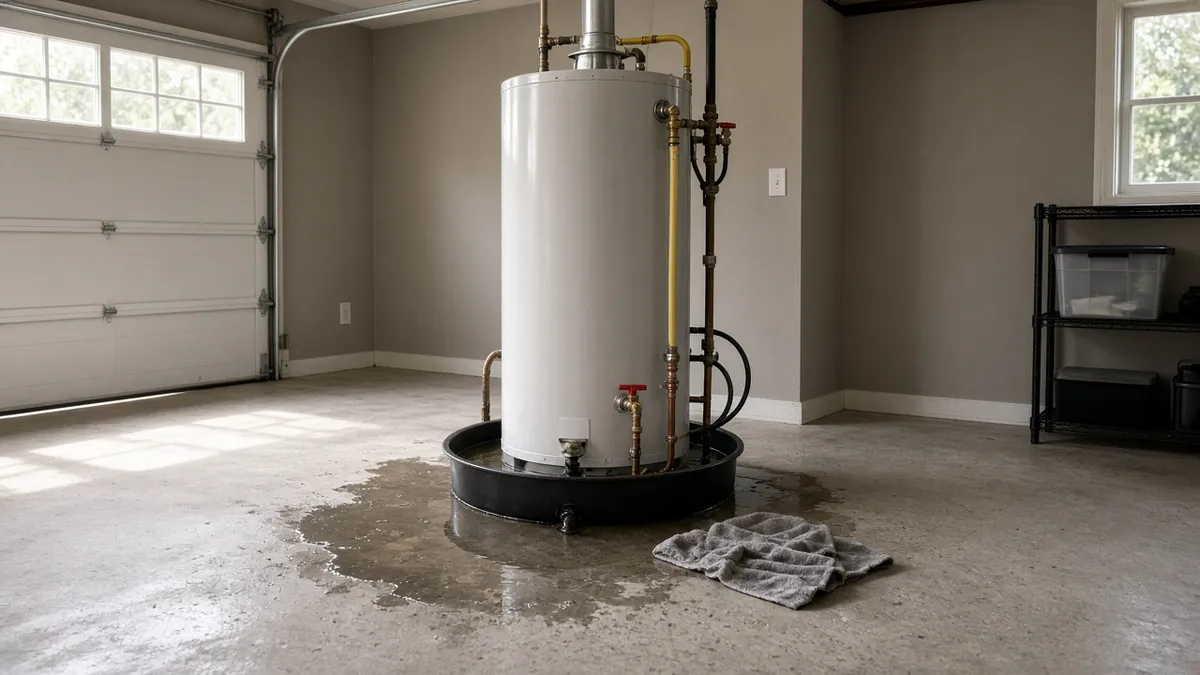
A water heater leak is one of the most common winter water losses in North Texas. Colder incoming water makes the heater work harder, and a tank or fitting that was already weak can give out.
During a North Texas freeze, a master plumber told NBC 5 Dallas-Fort Worth, "When it gets this cold, it seems water heaters tend to fail more frequently."
Here's what to do in the first few minutes, what the leak is telling you, and when it stops being a plumbing problem and becomes a water damage problem.
What Should I Do First If My Water Heater Is Leaking?
Stay calm and work in this order:
- Stay safe. If water is near outlets, cords or the electrical panel, don't stand in it to reach anything. If you smell gas, leave the house and call your gas company or 911 from outside.
- Shut off the cold water supply. Most tank heaters have a shutoff valve on the cold line at the top of the tank. Turn it off. If you can't find it or it won't turn, shut off the main water to the house. Our guide on knowing where your water shutoff is helps you find it before you need it.
- Turn off the energy source. On a gas heater, turn the control knob to off. On an electric heater, switch off its breaker at the panel.
- Contain the water. Towels, a wet vac and buckets buy you time. Move boxes, rugs and anything you care about out of the way.
- Take lots of video. The heater, the label, where the water is coming from and everywhere it went. It helps your plumber, and it helps you keep good records.
- Call a licensed plumber to repair or replace the heater. G3 and CMDR don't do plumbing repairs, but we'll take care of the water damage the heater left behind.
Where Is the Leak Coming From?
Where the water shows up tells you a lot. Your plumber makes the call, but here's what to watch for:
- Fittings and lines on top. A drip at the water connections can sometimes be a loose or worn fitting.
- The relief valve. The pipe running down the side of the tank comes from the temperature and pressure relief valve. Water from that pipe means the valve is opening or failing. Don't plug it or cap it. It's a safety device. Call a plumber.
- The drain valve near the bottom. It can drip if it's worn or not fully closed.
- The bottom of the tank itself. Water coming from the tank body is usually the bad news. Sediment and corrosion wear tanks out from the inside, and a tank that's leaking from the bottom generally needs to be replaced.
If you're not sure, check whether the floor is wet from condensation or a nearby line, not the heater. Our hidden water leak guide covers the quiet clues.
Why Are Attic and Closet Water Heaters a Bigger Deal?
A lot of North Texas homes have water heaters in the attic or in an interior closet, not just the garage. When a garage unit leaks, the water usually spreads across a concrete floor. When an attic unit leaks, the water goes through insulation, into the ceiling and down the inside of the walls before you ever see it. A closet unit can soak the flooring, baseboards and walls in the rooms around it.
That's why drain pans matter, and why leak sensors near the heater are worth it. Our guide to appliance leaks covers pans, sensors and the other usual suspects. For attic plumbing in a freeze, read frozen attic pipes. The same steps apply when a pipe bursts.
When Is a Water Heater Leak a Mitigation Call?
If the water stayed on the garage slab and you mopped it up, you probably just need a plumber. Call us when:
- Water reached drywall, baseboards, carpet, wood flooring or cabinets
- A ceiling is stained, wet or sagging below an attic unit
- Water ran under walls into the next room
- You notice a musty smell a few days later
- You can't tell how far the water went
Wet materials don't dry right just because the floor looks dry. Moisture trapped in walls and under flooring can lead to mold. Read what happens in the first 48 hours after water damage and whether wet drywall can be dried or needs replacing.
What Does CMDR Do After a Water Heater Leak?
CMDR Restoration (TDLR RCO #1801), the G3 Knows mitigation company, will:
- Confirm the source is shut off and the area is safe
- Map the moisture with meters and thermal imaging, so we know where the water actually went
- Extract standing water and remove materials that won't dry well
- Set air movers and dehumidifiers, and log readings until it's dry
See what a mitigation company does on site for the full walk-through. Here's why to call CMDR this winter. Once it's dry, G3 Construction rebuilds from the same file. Drywall, texture, paint, baseboards, flooring and cabinets, with one point of contact from wet to finished and our 1-year workmanship warranty.
Watch: Why Drying Out Takes Time
Water heater leaks are rarely "just a mop job" once water gets into walls and flooring. In the video on this page, we explain why drying out takes the time it does and what's happening at each step, so you know what to expect.
Frequently Asked Questions
Can I keep using a leaking water heater?
Don't. Shut off the water and the gas or power, and have a licensed plumber look at it.
Is a water heater leaking from the bottom fixable?
Sometimes the drain valve is the culprit. If the tank itself is leaking, it generally needs to be replaced. Your plumber will tell you which.
How do I shut off my water heater?
Close the cold water valve on top of the tank, then turn the gas control to off or switch off the heater's breaker.
Who do I call if my water heater flooded the house?
A plumber for the heater, and G3 at (945) 300-9018 for the water damage. CMDR dries it out, and G3 Construction puts it back together.
We're based in Argyle, TX, and serve the surrounding North Texas communities. Before the first freeze, find your shutoffs and take a look at your water heater. Then read how to prevent frozen pipes. If water already got out, start on our water damage page, read what homeowners say in our reviews, then call (945) 300-9018 or tap the button below. Tell us what's happening, and we'll help you understand your next step. WATER HEATER LEAKED INTO YOUR HOME? CALL CMDR AND G3 TODAY.
Keep learning: see our CMDR Restoration & Mitigation page, read Water Mitigation vs. Restoration: What's the Difference?, or read what homeowners say in our customer reviews.
CMDR Restoration · Know Your Next Step
Tell Us What's Happening.
We'll help you understand how G3 can help. Call (945) 300-9018 or use the button below.
GET HELP WITH WATER DAMAGE