
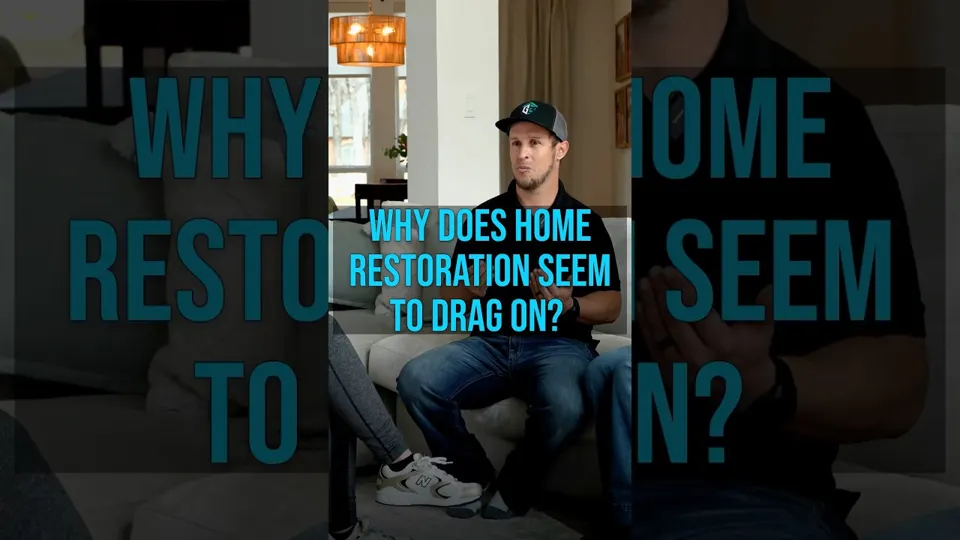
 WatchWhy Does Home Restoration Seem to Drag On?
Matthew made one of our water loss videos for a family who called one night after a pipe burst and flooded their first floor from the ceiling. They didn't know what to do, so they did what most people do. They called their insurance carrier, and things got moving before anybody had a plan. That's not a knock on them. When water is pouring through a light fixture, nobody's thinking straight.
So here's the plan, before you need it. Read it now. Share it with your family. Tape it inside a cabinet if you want.
What Should I Do in the First Five Minutes?
- Shut off the main water valve. In many North Texas homes it's in the garage, near the water heater, or in a box near the street. If you don't know where yours is, find it this week. Our guide on finding your water shutoff helps.
- Get people and pets out of the wet area. Especially if water is coming through a ceiling. Wet ceilings can sag and fall.
- Turn off power to affected rooms at the breaker, but only if you can reach the panel without standing in water. If you can't, stay out and wait for help.
- Open a faucet at the lowest point in the house to drain the remaining water out of the lines.
What Should I Do in the First Hour?
- Take photos and video of everything, before you move much. Wide shots of each room, then close-ups of ceilings, walls, floors and damaged belongings. Get the broken pipe if you can see it.
- Move valuables and electronics out of harm's way. Put aluminum foil or blocks under furniture legs sitting on wet carpet.
- Mop or towel up what you safely can. Don't use a household vacuum on water.
- Call a plumber to repair the line so water can come back on.
- Call for mitigation. The sooner drying starts, the more materials can usually be saved.
Should I Call My Insurance Carrier First?
That's your call, and you should read your own policy or talk with your agent about what it requires. We won't tell you what your policy covers. What we will say is this: you have the right to choose who works on your home. Many homeowners don't realize that. Take a breath, document what happened, and choose a mitigation company you trust.
Matthew's video tells the story of a neighbor whose first mitigation was done poorly. Very little drywall was removed, the carpet stayed and no flood cuts were made. The family started rebuilding, then worried about mold. The house had to be mitigated again, this time to a written protocol from an indoor environmental professional. It's a good reminder that the first crew matters.
What Mistakes Make a Burst Pipe Worse?
- Waiting until Monday. Water keeps wicking into drywall, flooring and insulation.
- Turning the water back on before the pipe is fixed, "just to check."
- Using fans alone and closing the door. You need dehumidification too.
- Throwing away damaged items before they're photographed.
- Putting baseboards and furniture back before moisture readings say it's dry.
- Ignoring the ceiling. A bulging ceiling is holding water and can come down.
What Does CMDR Do When We Get There?
CMDR Restoration, our mitigation partner (licensed by TDLR, RCO #1801), will:
- Confirm the source is stopped and the area is safe
- Extract standing water
- Map moisture with meters and thermal imaging
- Remove what can't be dried, with flood cuts at or above IICRC guidance
- Set up air movers and dehumidifiers
- Monitor and log moisture readings until the structure is dry
Then G3 rebuilds. One team, from wet to finished. Learn more on our water damage page.
How Do I Keep This From Happening Again?
Most burst pipes in North Texas happen during hard freezes, and a lot of them don't leak until they thaw. Insulate attic and exterior-wall lines, drip faucets on the coldest nights, cover outdoor faucets and keep the thermostat steady. Our full checklist is in how to prevent frozen pipes.
If a pipe just burst, call (945) 300-9018. We'll talk you through the next step. See our guide to emergency water removal if water is already spreading.
Frequently Asked Questions
Can I stay in my house after a burst pipe?
It depends on the damage, power and air quality. If a ceiling is sagging or the electric is affected, stay out of those rooms.
How do I know if water got inside the walls?
Moisture meters and thermal cameras. Walls can feel dry while they're wet inside.
Should I pull up wet carpet myself?
You can move belongings. Leave carpet and pad for the crew so it's documented and handled correctly.
Do I have to use the mitigation company my carrier suggests?
Ask your carrier and read your policy, but many homeowners are surprised to learn they can choose who works on their home.
Keep learning: see our CMDR Restoration & Mitigation page, read Water Mitigation in North Texas: Why Call CMDR This Winter, or read what homeowners say in our customer reviews.
CMDR Restoration · Know Your Next Step
Tell Us What's Happening.
We'll help you understand how G3 can help. Call (945) 300-9018 or use the button below.
GET HELP WITH WATER DAMAGE