
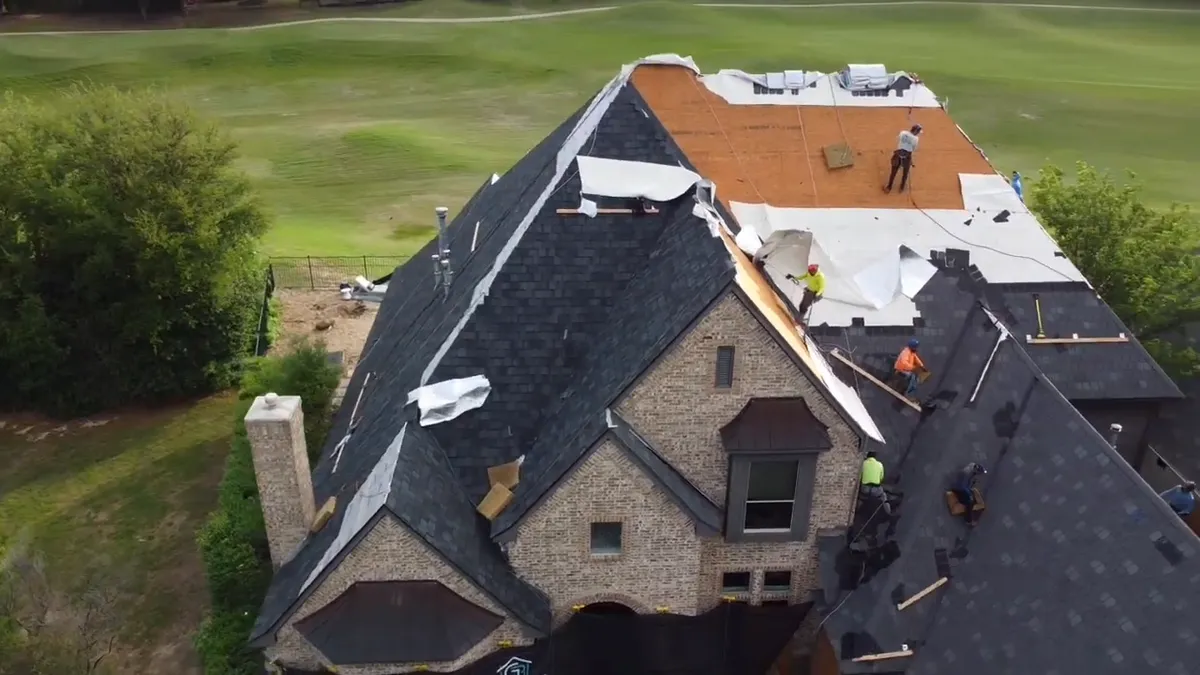
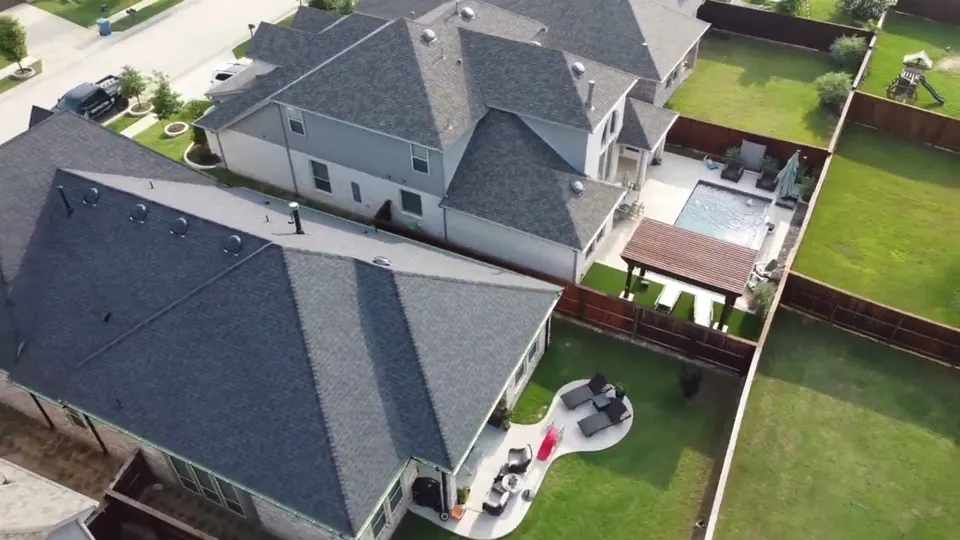
 WatchCertainTeed Landmark Black/Moire Transformation in Lantana, TX
Can you replace a roof in winter? Y'all start asking us that the minute the first cold front blows through, and the first one just did. The short answer is yes. The longer answer is that cold weather changes how a roof has to be installed, and you should know what to ask before anybody tears yours off. Let's get in the know.
What Happened?
FOX 4 reported that the National Weather Service issued the first freeze warning of the season for parts of North Texas, including Denton, Tarrant and Collin counties, with lows expected as low as 27 degrees. The NWS Fort Worth forecast discussion called for upper-20s to low-30s lows, sunny afternoons in the 50s, and a warming trend after that.
That's a North Texas winter in a nutshell: cold nights, workable afternoons and a warm-up a few days later.
Why Does Cold Weather Matter for a New Roof?
Asphalt shingles care about temperature. Shingle manufacturer GAF explains two things that change below 40 degrees:
- Shingles get stiff. Below 40°F, asphalt shingles lose flexibility and can crack if they're thrown, dropped or bent. A cracked shingle can leak.
- The seal strip doesn't activate. Every shingle has a heat-activated sealant strip that bonds it to the one below. It needs warmth, sun and temperatures above 40°F to do its job. Until it seals, the shingle is more exposed to wind lifting it.
It's the same seal strip we cover in our guide to wind damage to shingles.
So Can a Roof Still Go On When It's Cold?
Yes. GAF says its official recommendation is to install at 40°F or warmer, and that installation can happen below that when contractors follow its cold-weather procedures. The big one is hand sealing: dabs of approved asphalt roofing cement under each shingle tab, pressed down, because the strip won't seal on its own yet. GAF also says the shingles finish sealing naturally once the weather warms and the sun hits the roof, and that cold-weather installs don't affect its warranty when its application instructions, including the cold-weather steps, are followed.
Every manufacturer publishes its own instructions for its own products. Either way, a winter roof has to be built by the book for that day's temperature, not like it's July.
Why Is North Texas a Good Place for a Winter Roof?
Because we don't get a winter like the folks up north do. Most of our cold snaps look like this week's: a frosty morning, then an afternoon that climbs back up. A crew can start later, work the warmest hours of the day and stop before dark.
What does stop a roof job is ice, freezing rain and high wind. If the deck is wet or icy, nobody should be laying shingles on it. A good roofer moves the schedule instead of pushing through.
And if your roof is already leaking, waiting for spring isn't really an option. Water in the attic in December is still water in the attic. If an ice storm is what got you, read our guide to ice storm roof leaks in North Texas.
What Should You Ask Before a Winter Roof Replacement?
Ask these, whoever you hire:
- What's your plan when it's under 40 degrees? You want to hear "hand sealing" and "follow the manufacturer's instructions," not "it'll be fine."
- Where will the shingles be stored before install? GAF recommends keeping them warm, not sitting out in the cold overnight.
- What happens if ice or freezing rain shows up? The right answer is "we reschedule."
- Will you tear off to the decking and replace bad wood? Same as any season. Here's what goes under the shingles on every roof we build.
- What's the workmanship warranty, in writing? And how much do you want upfront? Big deposits before materials show up are a red flag. Here's how to spot a storm chaser roofer.
Why Is Winter a Smart Time to Call G3?
Because you can plan instead of panic. Spring in North Texas means hail season, and after a big storm, roofers' schedules fill up fast. Winter gives you time to look at your roof, compare products and get it on the schedule without the rush. If you're not sure your roof needs replacing yet, start with how long a roof lasts in Texas.
Here's what working with G3 looks like:
- Local. We're based in Argyle, TX. This is home.
- Licensed & Insured.
- No hard sell. We inspect, show you the photos and let you decide.
- Built right underneath. Tear-off, decking checked, and all vents and flashings replaced. Quality starts before the first shingle.
- A schedule up front. We'll walk you through the timeline, and how the weather fits into it, before we start.
- Backed in writing. Our work carries a 1-year workmanship warranty, plus the manufacturer's warranty on the product.
Want to see the finished product? Watch the video on this page. And if you want your new roof wearing Christmas lights next month, read how to hang Christmas lights without damaging your roof first. Thinking about windows too? Same answer: you can replace windows in winter.
Know Your Next Step
Don't wait for a spring storm to make the decision for you. Visit our roofing and storm damage page, read what homeowners say about us, then give us a call.
THINKING ABOUT A NEW ROOF THIS WINTER? CALL G3 AT (945) 300-9018 AND SCHEDULE AN INSPECTION.
Frequently Asked Questions
Can you replace a roof in winter?
Yes. Shingles can be installed in cold weather when the roofer follows the manufacturer's cold-weather instructions, such as hand sealing, and schedules around ice, freezing rain and high wind.
What temperature is too cold to install shingles?
GAF recommends installing at 40°F or warmer, and says installs below that can happen when its cold-weather precautions are followed. Check the instructions for the specific shingle on your roof.
Will shingles seal in cold weather?
Not on their own. The seal strip needs warmth and sun, so shingles are hand sealed with roofing cement in cold weather and finish sealing naturally when it warms up.
Does a winter install void my shingle warranty?
GAF says it doesn't when all of its application instructions, including the cold-weather steps, are followed. Ask your roofer which product they're installing and how they follow its instructions.
Keep learning: see our Roofing & Storm Damage page, read CertainTeed Landmark vs. Belmont IR Shingles, or read what homeowners say in our customer reviews.
Know Your Next Step
Tell Us What's Happening.
We'll help you understand how G3 can help. Call (945) 300-9018 or use the button below.
SCHEDULE AN INSPECTION