
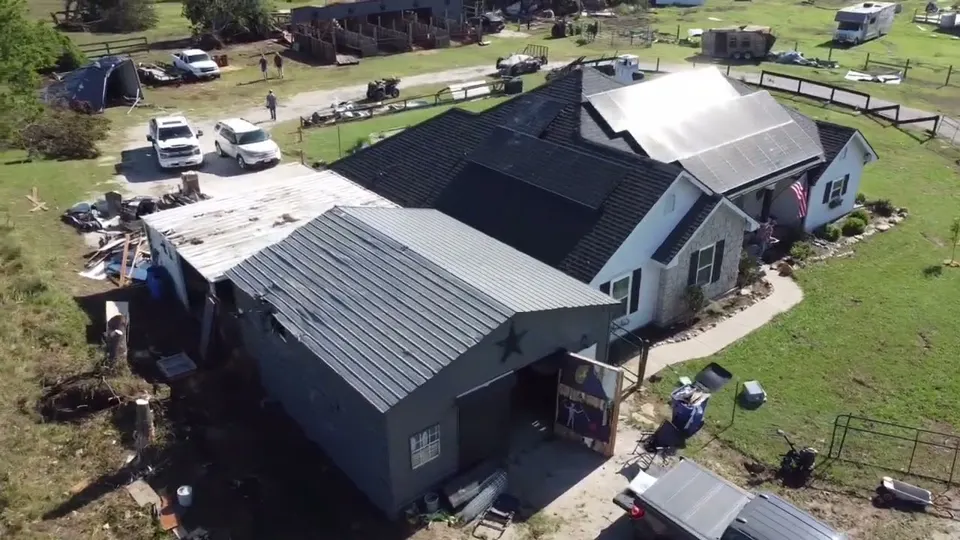
 WatchSanger Tornado Damage Pre-Restoration
North Texas storms rarely bring just one thing. We get hail, straight-line winds, heavy rain and sometimes tornadoes, often in the same afternoon. Our portfolio includes footage of tornado damage before restoration in Sanger, and it's a reminder how much wind can do to a roof.
After a storm, it helps to know what kind of damage you're looking at. Hail and wind damage look different, and an inspector will document them differently.
What Does Wind Damage Look Like?
Wind works by getting under shingles and lifting them. Common signs:
- Missing shingles. You might find pieces in the yard or see a dark spot on the roof where one blew off.
- Creased shingles. A shingle can lift, fold back and crease, then lay back down. The crease line breaks the seal and weakens it.
- Lifted or unsealed tabs. Shingles are designed to seal to the course below. Wind can break that seal.
- Torn edges along rakes, eaves and ridges, where wind hits hardest.
- Exposed nails or underlayment.
- Damaged ridge caps at the peaks.
Wind damage often shows up on the side of the roof facing the storm, and along edges and ridges.
What Does Hail Damage Look Like?
Hail works by impact. Common signs:
- Bruises and dark spots where granules were knocked away
- Exposed mat showing through the granules
- Cracks radiating from the point of impact
- Random patterns across slopes
- Dents in metal vents, caps, gutters and flashing
Our guide on how to tell if your roof has hail damage goes deeper.
Why Does Wind vs. Hail Damage Matter for My Roof?
A few reasons:
- Repair approach. A few wind-lifted shingles might be repairable. Widespread hail damage often means replacement.
- Matching. Replacement shingles have to match the existing roof. Matthew's Roof Denied videos tell the story of a roof with a discontinued shingle. When the original product isn't made anymore, a few torn shingles can become a much bigger question. In that case, we had a sample tested by a lab to confirm the product was discontinued.
- Documentation. A clear record of what kind of damage happened, where and when helps tell the story of your roof.
What Should I Do After a Windstorm?
- Stay safe. Watch for downed power lines and loose debris. Don't go on the roof.
- Walk the yard and look for shingle pieces, ridge caps or flashing.
- Look at the roof from the ground, especially edges and ridges.
- Check the attic and ceilings for new water stains.
- Take photos of everything, including debris, with the date of the storm.
- Tarp if needed. If shingles are missing and rain is coming, a temporary tarp can protect the house. Call a pro so nobody gets hurt.
- Get an inspection. Our roof inspection page explains how we do it.
Can Wind and Hail Damage Happen Together?
Yes, and it's common in North Texas. A storm can bring hail first, then gusting winds. On one of the roofs in Matthew's Roof Denied series, there were wind-torn shingles plus hail dents on caps and slant-back vents, along with window and stucco damage. A thorough inspection looks at both and documents each.
How Does G3 Inspect for Wind Damage?
We check every slope, edge and ridge. We look for lifted, creased and missing shingles, broken seals, exposed nails and damaged flashing. We also check collateral, like gutters, screens and fences. We photograph what we find and walk you through it. If we see damage, we'll recommend you talk to your carrier. You decide. We don't negotiate or adjust claims.
Learn more on our roofing and storm damage page, or call (945) 300-9018.
Frequently Asked Questions
Can creased shingles be repaired?
Sometimes, if replacement shingles match and the damage is limited.
Why are my missing shingles only on one side?
Wind often hits the side facing the storm hardest.
Should I tarp the roof myself?
We'd rather you didn't climb up. Call a pro.
Can wind damage cause leaks later?
Yes. Broken seals and creases let water in over time.
Keep learning: see our Roofing & Storm Damage page, read CertainTeed Landmark vs. Belmont IR Shingles, or read what homeowners say in our customer reviews.
Know Your Next Step
Tell Us What's Happening.
We'll help you understand how G3 can help. Call (945) 300-9018 or use the button below.
SCHEDULE AN INSPECTION