
 WatchWhy Does Home Restoration Seem to Drag On?
Right now it's 80-something degrees and y'all are thinking about Halloween, not ice. But the forecasters are already talking about winter, and it's worth five minutes of your time.
NOAA's U.S. Winter Outlook says a very strong El Niño will likely shape December through February. That tilts the odds toward wetter-than-average conditions across the southern tier of the country, from the Southwest to the Southeast. In NOAA's words, it "tilts the odds toward stormier weather across the South." The National Weather Service is also adding "Particularly Dangerous Situation" wording to select Ice Storm Warnings this season, for high-confidence storms of historic severity.
Closer to home, FOX 4 is tracking rain Friday into Saturday and a stronger cold front early next week. No freeze is in the forecast yet. That's exactly why now is the time to get ready.
Why Does a Wet, Stormy Winter Matter for Your Roof?
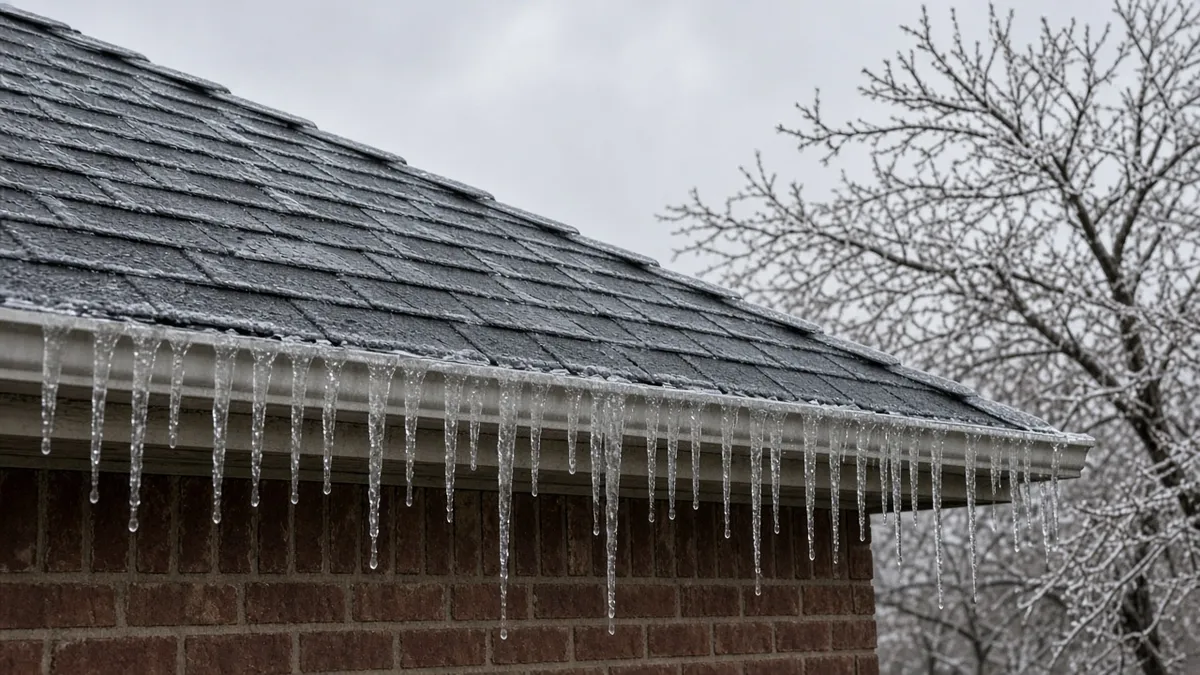
An outlook isn't a promise of a freeze. NOAA is clear that it can't predict snow totals this far out. What it does tell us is that we may see more rain, and when cold air shows up, more chances for that moisture to turn into ice.
Ice is hard on a house in ways rain isn't:
- Ice builds up on the edges. Gutters and the bottom edge of the roof freeze first. When the roof above starts to melt, that water can back up under the shingles instead of running off.
- Weight adds up. Ice-loaded limbs come down on roofs, gutters and fences.
- Small problems get bigger. A lifted shingle, a cracked pipe boot or a loose flashing that barely drips in a summer storm can let in a lot of water during a slow thaw.
- Leaks hide. Water from an ice backup often shows up inside the wall or attic first. You may not see it on the ceiling until it's been there a while.
What Should I Do Before Winter Gets Here?
Here's what we'd do on our own houses this fall:
- Clean the gutters and downspouts. Leaves from fall plus a freeze is how you get a gutter full of ice. Make sure water has somewhere to go.
- Look at your roof from the ground. Missing or lifted shingles, damaged flashing around chimneys and vents, and dents from past hail are all places water can find. Don't climb up there. Take pictures with your phone's zoom.
- Trim limbs away from the roof. Anything hanging over the house is a candidate to come down under ice. See our guide on trimming trees away from your roof.
- Check the attic. Look for old water stains on the decking, damp insulation or daylight where it shouldn't be. While you're up there, protect your attic water lines.
- Know where your water shutoff is. If a pipe splits or water starts pouring in, you need to be able to stop it fast. Here's how to find your water shutoff.
- Get the rest of the house ready. Our winter storm home prep checklist covers pipes, power and supplies.
What If Water Comes Through the Ceiling During an Ice Storm?
First, be safe. If the ceiling is sagging, stay out from under it. If water is near lights, outlets or the panel, turn off power to that area if you can do it safely.
Then:
- Catch what you can. Buckets, towels and a tarp over furniture.
- Poke a small hole in a bulging ceiling spot over a bucket to let the water out in one place, but only if it's safe to reach.
- Move valuables and electronics out of the room.
- Take lots of video. Record the ceiling, the attic if you can get there safely, and any damaged belongings before you move them.
- Don't wait on drying. Wet drywall, insulation and framing need to be dried properly, fast. Fans alone usually aren't enough. Here's what happens in the first 48 hours and why it matters.
It is the homeowner's responsibility to do everything within their control to prevent additional damage. That's where mitigation comes in.
Why Call CMDR Restoration?
Most people don't know the word "mitigation" until they need it. Mitigation is stopping the damage from getting worse: extracting water, drying the structure, documenting moisture and preventing mold. Here's the difference between mitigation and restoration.
CMDR Restoration is the G3 Knows mitigation company. CMDR handles the water and the drying. When the house is stable, G3 Roofing & Construction fixes the roof and rebuilds the inside from the same file. One team, one point of contact, and you don't have to explain your story twice. When you call G3, it really is that easy.
Put our number in your phone now, before the cold front, not during it: (945) 300-9018.
Frequently Asked Questions
Does an El Niño winter mean North Texas will freeze?
Not necessarily. NOAA's outlook leans wetter and stormier across the South, but it doesn't forecast specific freezes or snow this far out. Watch NWS Fort Worth for watches and warnings as winter gets closer.
Can ice on my roof cause a leak even if my roof isn't old?
Yes. Ice at the gutter line can back meltwater up under shingles, and weak spots like flashing and pipe boots are common entry points on roofs of any age.
Should I get on my roof to knock ice off?
No. Ice and a ladder are a bad combination, and chipping at ice can damage shingles. Keep gutters clear before winter and call a pro if you see a problem.
Who should I call first if water is coming in?
Stop the water source if you can, then call a mitigation company so drying starts quickly. CMDR Restoration handles mitigation and G3 handles the roof and rebuild, at (945) 300-9018.
Keep learning: see our CMDR Restoration & Mitigation page, read Leaving for the Holidays? How to Freeze-Proof Your Home, or read what homeowners say in our customer reviews.
CMDR Restoration · Know Your Next Step
Tell Us What's Happening.
We'll help you understand how G3 can help. Call (945) 300-9018 or use the button below.
GET HELP WITH WATER DAMAGE