
 WatchWhy Does Home Restoration Seem to Drag On?
Our hearts go out to the families in New Mexico, Colorado and Utah. The Associated Press reports that more than four days of flooding along the San Juan and Animas rivers left hundreds of homes evacuated or cut off, at least two people dead, and New Mexico's governor estimating recovery costs as high as $300 million. More rain is in the forecast there this weekend.
One family in Farmington came home to laminate floors warped under several inches of muddy floodwater and most of their furniture destroyed. The mayor of Bluff, Utah, said it plainly: "It's the second flood that really gets you, you know, because everything is completely saturated."
That's a long way from Argyle, TX. But North Texas floods too, and fast. FOX 4 is tracking rain chances Friday into Saturday and a much stronger system with storms Monday and Tuesday before a big cooldown. Our clay soil doesn't soak up heavy rain quickly, and low streets, creeks and poorly graded yards can send water where it doesn't belong.
So here's what we want you to know before you ever need it.
Why Is Floodwater Different From a Pipe Leak?
Water from a broken supply line starts out clean. Floodwater doesn't. Water that comes in from outside, over the ground or up from a creek, carries mud, sewage, chemicals and whatever else it picked up on the way. The restoration industry calls that Category 3 water, and it gets handled differently. Here's what Category 3 water means for your home.
What that means in plain terms:
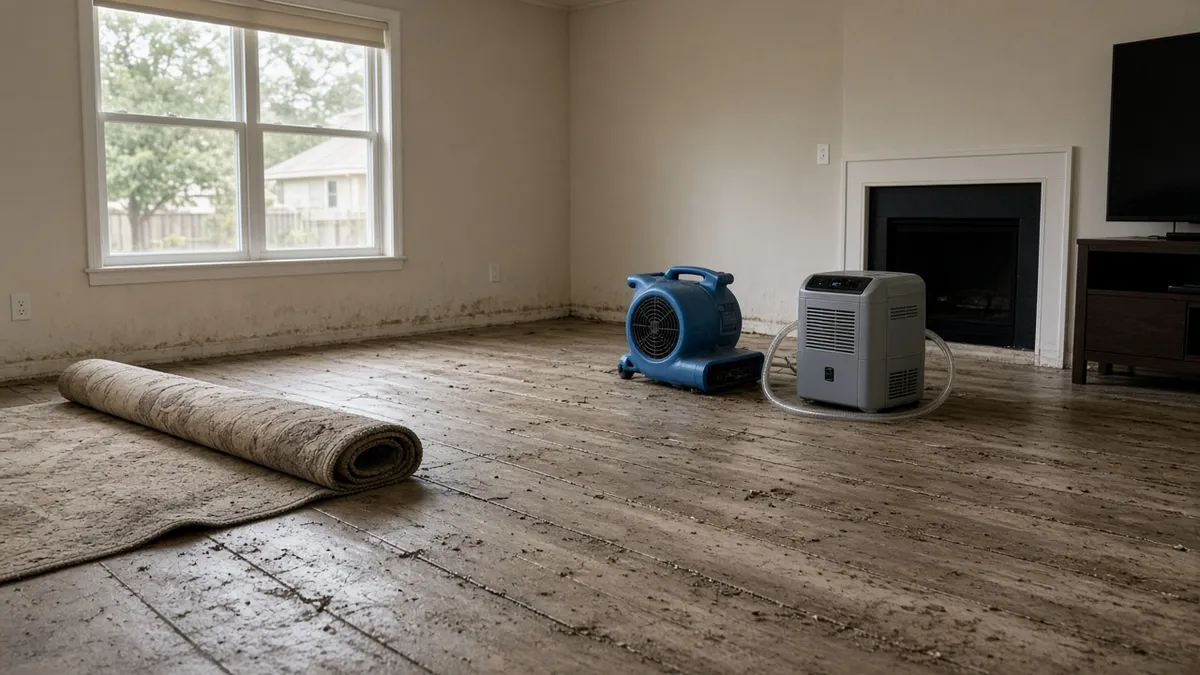
- Porous materials it touched usually can't be saved. Carpet, pad, wet insulation and the bottom of the drywall typically come out.
- Your health comes first. Don't wade through it, and keep kids and pets out.
- Drying alone isn't enough. The structure has to be cleaned and treated, not just dried, before anything gets put back.
What Should I Do First When Floodwater Gets In?
- Stay safe. Never drive or walk through moving water. If officials tell you to leave, leave.
- Power off if it's safe. If water is near outlets, cords or the panel, don't touch anything while you're standing in water. If you can't reach the breaker from a dry spot, wait for help.
- Take lots of video. Before you move anything, record every room, the waterline on the walls, the floors and your belongings. Here's how to document a water loss for your records.
- Wear protection. Rubber boots, gloves and a mask if you go back in.
- Don't wait on drying. The clock starts the moment water hits the floor. Here's what happens in the first 48 hours and why it matters.
It is the homeowner's responsibility to do everything within their control to prevent additional damage. That's what mitigation is for.
What Can Be Saved and What Has to Go?
This is the hard part, and it's where people get hurt by trying to save too much.
- Drywall: Wet drywall is usually cut out above the waterline, often called a flood cut. Read whether wet drywall can be dried or has to be replaced.
- Floors: Laminate swells and cups. Carpet and pad that sat in floodwater generally go.
- Cabinets and trim: Some can be saved, some can't. It depends on the material and how long it sat wet.
- Hidden areas: Water wicks up into walls and under floors. Moisture readings tell the truth; your eyes don't.
If it's not dried properly, you're looking at mold. Here's what to know about mold after water damage.
Why Does the "Second Flood" Hurt So Much?
The Bluff mayor's point applies to a house too. When the walls, floors and ground around your foundation are already saturated, the next rain has nowhere to go. A house that isn't dried out completely is more vulnerable the next time, and the moisture you can't see keeps doing damage after the water you can see is gone.
That's why we don't rush the drying. And it's also why restoration takes longer than people expect. Watch the video on this page for why home restoration can seem to drag on.
What Can I Do Now to Keep Water Out?
- Check your grading. Soil should slope away from the house, not toward it. Our guide on yard drainage solutions covers the basics.
- Clean gutters and extend downspouts so roof water lands well away from the foundation.
- Know where your water shutoff and breaker panel are. Here's how to find your water shutoff.
- Move valuables up. Keep important papers and keepsakes off the floor in garages and closets.
- Watch NWS Fort Worth for flood watches and warnings when storms move in.
Why Call CMDR and G3?
CMDR Restoration is the G3 Knows mitigation company. CMDR extracts the water, removes what can't be saved, cleans and dries the structure, and documents moisture along the way. When the house is dry and stable, G3 Construction rebuilds it from the same file. Here's how mitigation and rebuild work as one team. One point of contact, and you don't have to tell your story twice. When you call G3, it really is that easy.
Tell us what's happening: (945) 300-9018.
Frequently Asked Questions
Is floodwater the same as water from a burst pipe?
No. Water from outside is treated as Category 3 water because it can carry sewage, chemicals and debris. Materials it soaks usually have to be removed, not just dried.
Can I dry my house out with fans after a flood?
Fans alone usually aren't enough, and they don't clean contaminated materials. Floodwater cleanup needs removal of soaked materials, cleaning and measured drying.
Should I go back in my house right after the water goes down?
Only when officials say it's safe. Have power checked if water reached outlets or the panel, and wear boots, gloves and a mask.
Who should I call if water gets in my house?
Call a mitigation company so cleanup and drying start quickly. CMDR Restoration handles mitigation and G3 handles the rebuild, at (945) 300-9018.
Keep learning: see our Water Damage page, read Appliance Leaks: Washer, Dishwasher, Water Heater, or read what homeowners say in our customer reviews.
Know Your Next Step
Tell Us What's Happening.
We'll help you understand how G3 can help. Call (945) 300-9018 or use the button below.
GET HELP WITH WATER DAMAGE