
 WatchUnderstanding Water Loss Claims: A Homeowner's Case Study
Mold is what keeps homeowners up at night after a leak. And honestly, it should be taken seriously. But here's the encouraging part: most mold problems after a water loss are preventable. Prevention isn't about sprays or bleach. It's about drying the house correctly, removing the right materials and confirming the job is done before anything gets rebuilt.
If you think mold is already growing, read mold after a leak: signs and testing. This guide is about keeping it from starting.
Why Does Mold Grow After Water Damage?
Matthew puts it simply in our videos: mold needs three things. Moisture, heat and food. In a house, food is anything organic, like the paper on drywall, the paper backing on insulation, wood studs and even cardboard boxes in a closet. North Texas homes are warm most of the year. So once water gets in, the only one of the three you can really take away is the moisture.
What Are the Most Important Prevention Steps?
- Stop the water fast. Shut off the main and fix the source.
- Get the water out. Extraction removes far more than fans can evaporate.
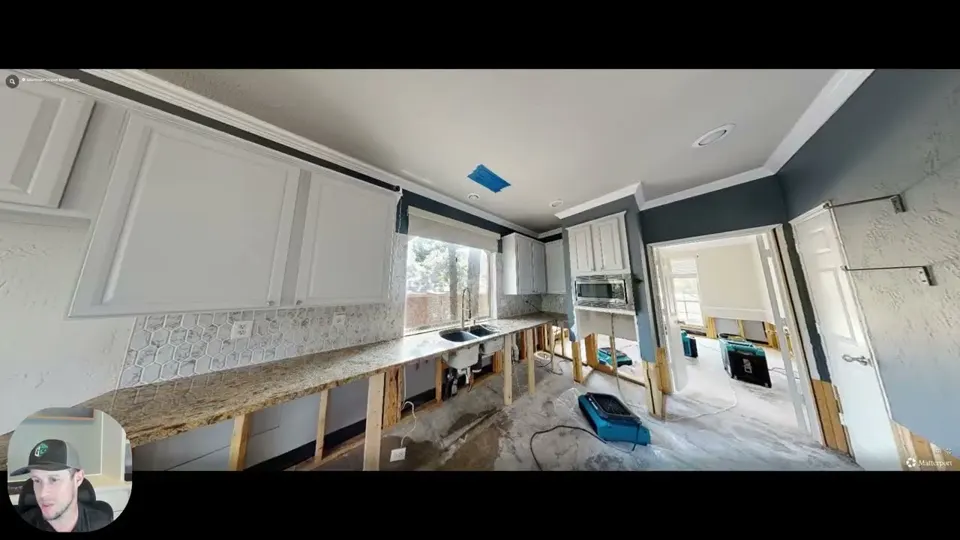
- Remove materials mold can grow on that won't dry. Wet insulation, carpet pad and saturated drywall usually need to go.
- Make proper flood cuts. IICRC standards call for removal at least 18 inches above where moisture was found. Most crews cut at 2 feet, and higher if readings say so.
- Dry the structure, not just the surface. Air movers plus dehumidifiers, with readings logged.
- Clean and treat what stays. Studs and framing can often be cleaned, HEPA vacuumed and treated rather than replaced.
- Verify before rebuilding. Readings must reach normal levels. On larger losses, clearance testing confirms it.
What Goes Wrong When Mitigation Is Rushed?
This is the part that worries us. Matthew has walked into homes where only a couple of square feet of drywall came out, carpet stayed down and no flood cuts were made. The family started putting their house back together, and then they worried mold was growing. In cases like that, the house has to be opened up again and mitigated properly. That costs time, money and peace of mind.
Rushed mitigation usually looks like:
- Fans with no dehumidification
- No moisture map, so hidden wet areas get missed
- Drywall cut too low, or not at all
- Wet insulation left in the wall
- Rebuild started before the readings say "dry"
What Is a Mitigation Protocol, and When Is It Worth It?
On bigger or more complex losses, we like to get a written protocol from a licensed indoor environmental professional. Think of them as the unbiased referee. They're not the carrier, who has an incentive to save money, and they're not the contractor, who could have an incentive to remove more. They inspect, test and write a plan describing what needs to be removed and cleaned. The one Matthew shows in our video was 42 pages long.
When the work is done, they test again for moisture and contaminants. If everything passes, they issue clearance. That clearance is your proof the job was done right before new materials go in.
What Can I Do as a Homeowner?
- Call for mitigation as soon as possible instead of waiting to see if it dries
- Keep the drying equipment running and doors closed as directed
- Run your HVAC normally unless told otherwise, and change the filter afterward
- Pull wet cardboard boxes, rugs and fabrics out of closets
- Don't paint over stains or caulk over damp areas
- Ask your mitigation company for their moisture logs
Who Handles This at G3 Knows?
CMDR Restoration, our mitigation partner (licensed by TDLR, RCO #1801), handles extraction, drying and treatment. G3 rebuilds once the structure is dry and cleared. Learn more on our water damage page or call (945) 300-9018.
Frequently Asked Questions
Does bleach prevent mold?
Bleach doesn't fix wet materials. Drying and removal do the real work.
Can I tell if mold is growing inside a wall?
Often not by looking. Smell, readings and testing are better guides.
Do all water losses need a protocol?
No. Smaller, clean-water losses often don't. Larger or contaminated losses benefit from one.
Will my HVAC spread mold?
If mold is present, it can. Tell your mitigation team about your system so they can account for it.
Keep learning: see our CMDR Restoration & Mitigation page, read Slab Leak Warning Signs in North Texas Homes, or read what homeowners say in our customer reviews.
CMDR Restoration · Know Your Next Step
Tell Us What's Happening.
We'll help you understand how G3 can help. Call (945) 300-9018 or use the button below.
GET HELP WITH WATER DAMAGE