
 WatchUnderstanding Water Loss Claims: A Homeowner's Case Study
What temperature do pipes freeze? It's the question everybody types into their phone the night the first freeze shows up on the forecast. Water freezes at 32 degrees, but your pipes usually don't freeze the moment the thermometer hits 32. The number that matters is lower, and the pipes that go first are the ones most of us never think about. Let's get in the know before the cold gets here.
What Is the Forecast Saying?
When we wrote this, the National Weather Service office in Fort Worth was calling for the first widespread freeze of the season across North Texas. Forecasters expected lows in the mid to upper 20s across a good portion of the northern and western parts of the region, with the lower 30s elsewhere, behind a cold front with breezy northwest winds.
Not everybody gets the same night. WFAA's forecast team expected Dallas and Fort Worth to stay a little above freezing, while colder spots outside the Metroplex could wake up to their first frost or freeze. If you live up here in Denton County, north and west of the big cities, you're in the colder part of that map.
So What Temperature Do Pipes Actually Freeze At?
There's real research on this. A homeowner guide published by the International Code Council explains that for homes in southern states, the "temperature alert threshold" is 20 degrees outside. That number comes from field tests by the Building Research Council at the University of Illinois. Uninsulated pipes in an unheated attic started to freeze when the outside temperature fell to 20 degrees or below.
The same guide says a survey of 71 plumbers working in southern states agreed that burst pipe problems started showing up when temperatures fell into the teens.
Why not 32? Two reasons from that guide:
- An unheated part of the house, like an insulated attic, usually stays a few degrees warmer than outside.
- Water "supercools" several degrees below freezing before ice starts to form.
Does That Mean I'm Safe in the Mid-20s?
Not always. This is the part people miss. The same guide is clear that pipes can freeze above 20 degrees when cold air, especially moving air on a windy night, reaches them through cracks in an outside wall or a lack of insulation. University of Illinois research found that wind chill can play a major role in speeding up ice blockage.
So a calm night at 28 is one thing. A windy night at 28 with a north wind blowing straight at a hose bib, an irrigation backflow preventer or a pipe in a drafty garage wall is another.
Here's how we'd think about it:
- Right around freezing: Protect what's outside. Disconnect hoses, cover hose bibs and protect the backflow preventer. Our guide to winterizing outdoor faucets and backflow walks through it. This is also the night to protect your plants from a freeze.
- Mid to upper 20s, or any freeze with wind: Add the inside steps. Open cabinet doors under sinks on outside walls, keep the garage door closed and seal drafts near pipes.
- 20 degrees or below: Treat it like the real thing. Drip faucets on vulnerable lines, check your attic water lines and know exactly where your main water shutoff is.
Why Does Dripping a Faucet Help?
It's not mainly about keeping water moving. According to the ICC guide, a frozen pipe usually doesn't burst where the ice is. It bursts because pressure builds between the ice blockage and a closed faucet. An open faucet relieves that pressure. Even a very slow drip works, and if a faucet has both hot and cold lines, both should drip. If the drip stops, leave the faucet open. That pipe may have frozen and still needs the relief.
Only drip the faucets on pipes that run through unheated or unprotected spaces. Our full frozen pipe prevention checklist covers the rest.
What If a Pipe Freezes or Bursts Anyway?
If you turn on a faucet and nothing comes out, don't wait on it. See our guide on how to thaw frozen pipes safely, and never use an open flame.
If a pipe bursts:
- Shut off the main water valve.
- Turn off power to wet areas if you can reach the breaker safely. Don't use electrical appliances while standing in water.
- Take lots of video of everything wet before anything gets moved.
- Call for mitigation. Water travels inside walls, under flooring and across ceilings. Here's what to do when a pipe bursts, and how to spot a pipe that burst inside a wall.
Remember, a frozen pipe often doesn't leak until it thaws. The calls tend to come in when the weather warms back up.
Who Do I Call When a Freeze Turns Into a Flood?
CMDR Restoration, the mitigation company in the G3 Knows family (licensed by TDLR, RCO #1801). CMDR finds where the water went with moisture meters and thermal imaging, removes what can't be saved and dries the structure until the readings say it's dry. Then G3 Construction rebuilds from the same file, backed by our 1-year workmanship warranty. One call, one team.
Watch: A Real Water Loss, Start to Finish
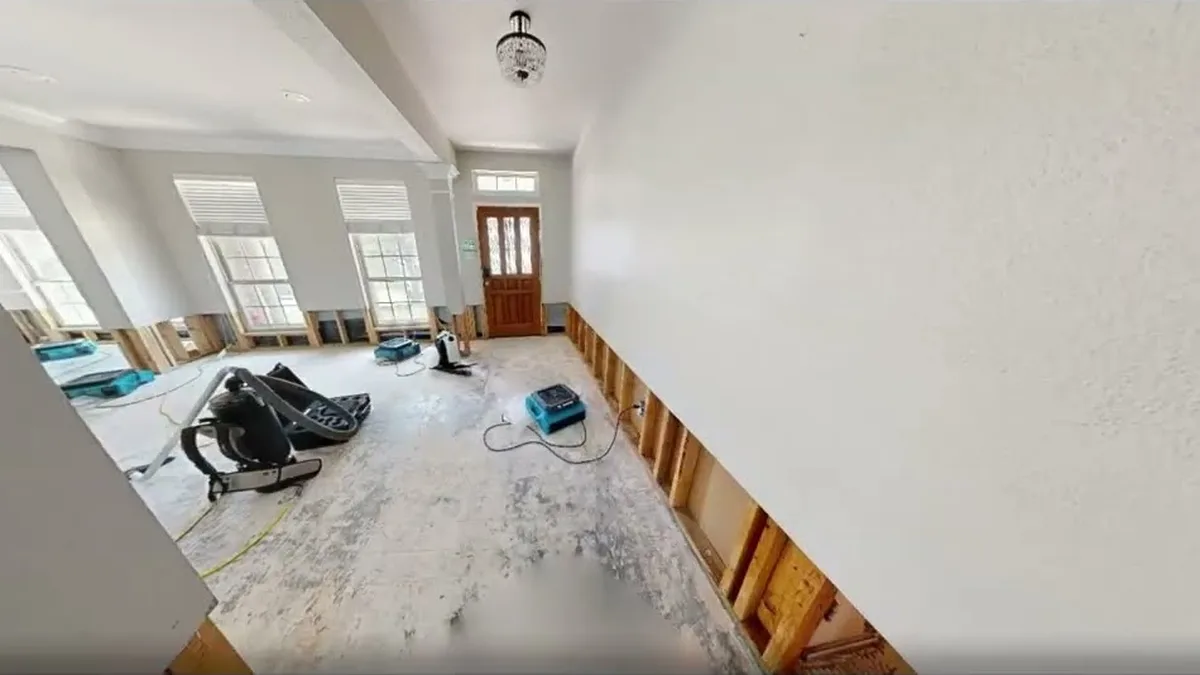
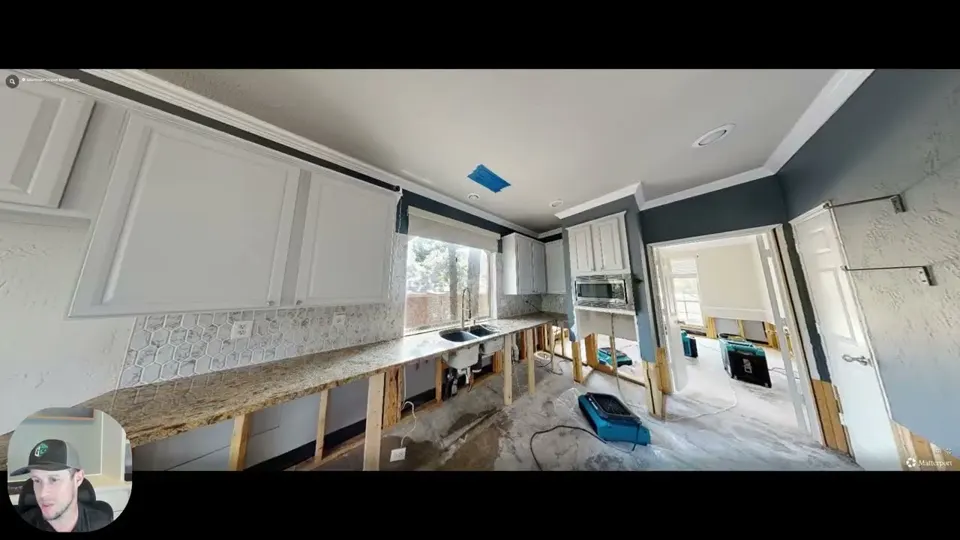
The video on this page, Understanding Water Loss Claims: A Homeowner's Case Study, walks through a real water loss from the homeowner's side. The photo up top is from that job: flood cuts along the walls and air movers drying the room. That's what it looks like when water gets into the structure.
Frequently Asked Questions
What temperature do pipes freeze in a house?
Water freezes at 32 degrees, but research cited by the International Code Council puts the alert threshold for homes in southern states at 20 degrees outside. Pipes exposed to wind or drafts can freeze at warmer temperatures.
Will my pipes freeze at 28 degrees?
Most protected indoor pipes shouldn't. Exposed outdoor faucets, backflow preventers and pipes in drafty walls or garages are at more risk, especially on a windy night.
Should I drip my faucets on the first freeze?
If the forecast is near 20 degrees, or your pipes run through unheated spaces, yes. A slow drip relieves pressure if a pipe freezes.
We're based in Argyle, TX, and serve the surrounding North Texas communities. Start on our water damage page, see all our CMDR mitigation guides, read what homeowners say in our reviews, then call (945) 300-9018 or tap the button below. Tell us what's happening, and we'll help you understand your next step. DON'T LET THE FIRST FREEZE BECOME A FLOOD. CALL CMDR AND G3 TODAY.
Keep learning: see our CMDR Restoration & Mitigation page, read Burst Pipe Water Damage: What to Do First in North Texas, or read what homeowners say in our customer reviews.
CMDR Restoration · Know Your Next Step
Tell Us What's Happening.
We'll help you understand how G3 can help. Call (945) 300-9018 or use the button below.
GET HELP WITH WATER DAMAGE