
 WatchUnderstanding Water Loss Claims: A Homeowner's Case Study
A surge of cold air is bringing the first frost or freeze of the season to millions of people. USA TODAY reports that AccuWeather expects the first hard freeze for parts of the Midwest, Ohio Valley and South, and that about 230 million people are in line for below-average temperatures, according to the FOX Forecast Center. An AccuWeather meteorologist told the paper that overnight lows from northeastern Texas to northern Florida could fall into the lower to middle 30s.
North Texas isn't in a hard freeze yet. But it's coming. The National Weather Service in Fort Worth puts the average first freeze at DFW in late November, and our homes have a lot of plumbing in exterior walls, attics and garages.
Here's what most folks don't know until it happens to them: when a pipe splits inside a wall, you usually can't see it. Water runs down behind the drywall, soaks the insulation and spreads under flooring before anything shows on the paint.
Why Do Pipes Burst Inside Walls?
Water expands as it freezes. The pressure builds between the ice and a closed faucet, and the pipe often splits somewhere other than where the ice is. Lines on exterior walls, under sinks on outside walls, in garage walls and in attics are the most exposed.
And a frozen pipe usually doesn't leak until it thaws. That's why the calls come in the day the weather warms back up, not the night of the freeze.
How Can I Tell If a Pipe Burst Inside a Wall?
Pay attention after every hard freeze, and again once temperatures climb back above freezing. Here are the signs to watch for:
- You hear water when nothing is running. Hissing, dripping or a steady rushing sound behind a wall, especially at night when the house is quiet.
- Your water meter keeps moving. Turn off every faucet, appliance and the irrigation system, then watch the meter's leak indicator. If it's spinning, water is going somewhere.
- Low or sputtering water pressure. A faucet that spits air or barely runs after a freeze can mean a frozen section or a break along that line.
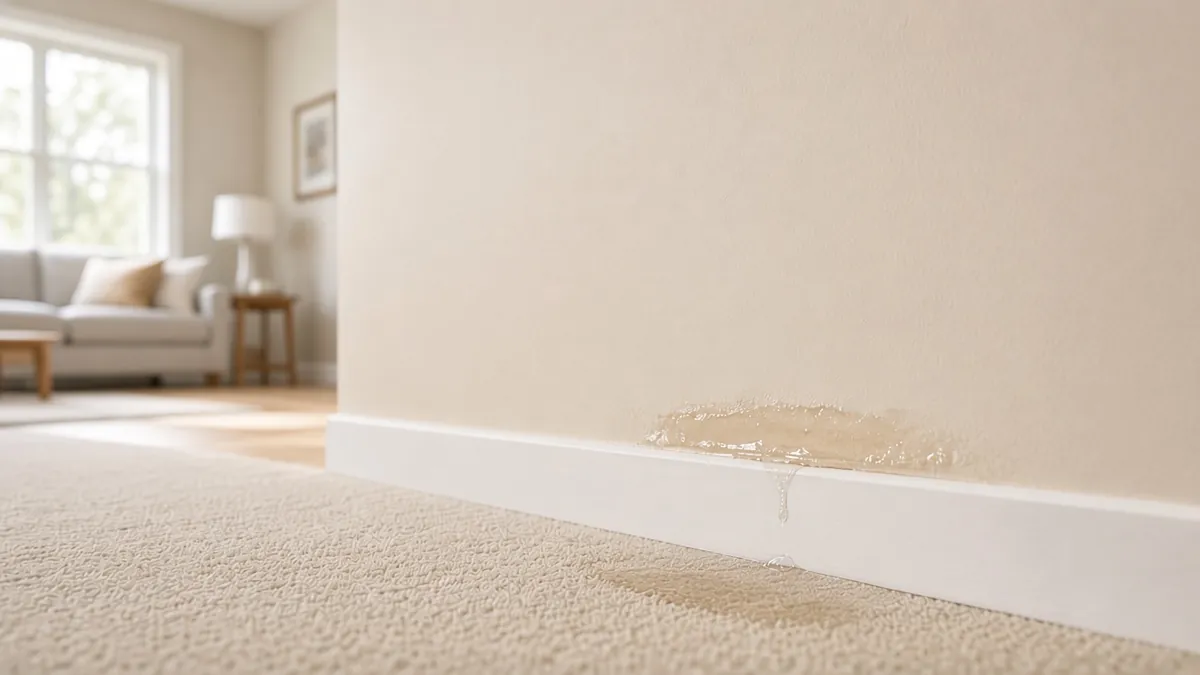
- New stains, bubbling or peeling paint. Look low on the wall first. Water runs down, so damage often shows up at the baseboard before it shows up higher.
- Soft or damp drywall. Press gently near the baseboard on walls that hold plumbing. If it gives or feels damp, don't ignore it.
- Wet carpet or warped flooring along a wall. Carpet that's damp at the edge, or wood and laminate that's cupping near a wall, is a classic clue.
- A ceiling stain under an attic line or upstairs bathroom. If a pipe above you split, the ceiling may be the first place it shows. See what a ceiling water stain means.
- A musty smell in one room or cabinet a few days after a freeze.
If you notice any of these after a cold snap, assume it's a water line until someone proves otherwise. Our guide to signs of a hidden water leak covers more quiet clues.
What Should I Do First?
Move fast. Water inside a wall doesn't dry out on its own.
- Shut off the main water. Every adult in the house should know where it is. If you don't, read know where your water shutoff is today, before you need it.
- Stay safe around electricity. If water is near outlets, fixtures or the breaker panel, shut off power to that area if you can do it safely. Don't stand in water to do it.
- Take lots of video. Record the wall, the floor, the ceiling and anything wet before you move much. That record is yours, and it helps everyone who works on the home after you.
- Call a licensed plumber to find and repair the break.
- Call for mitigation. Fixing the pipe stops new water. It doesn't dry what's already wet.
Don't assume the wall is fine because the paint looks dry. Insulation and framing can stay wet behind it. Our guide on whether wet drywall can be dried or has to be replaced explains how that call gets made.
Why Not Just Let It Dry?
Because you can't see inside the wall, and neither can a fan. Trapped moisture can lead to mold and bigger repairs. Getting the water out and the structure dried quickly helps keep a small leak from becoming a bigger repair.
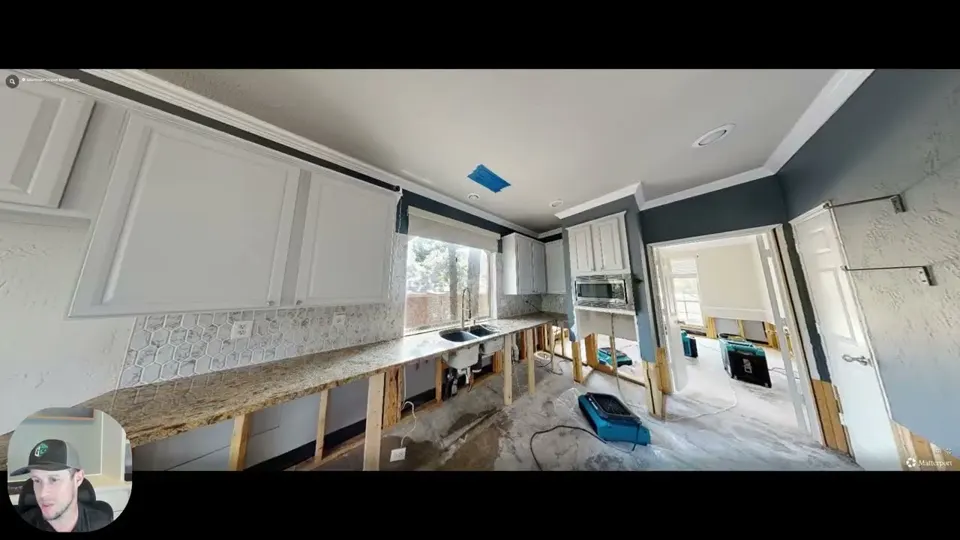
CMDR Restoration (TDLR RCO #1801) is our mitigation company. CMDR extracts the water, uses moisture meters to map how far it spread inside walls and floors, opens what has to be opened and dries the structure. Then G3 Construction rebuilds from the same file. One team, from wet to finished. Watch the video on this page to see how a real water loss plays out from the homeowner's side.
How Do I Keep It From Happening?
Prevention still beats everything. The full checklist is in how to prevent frozen pipes in North Texas. If a line does freeze, here's how to thaw frozen pipes safely, and if it already split, read what to do when a pipe bursts.
Frequently Asked Questions
How do I know if a pipe burst in my wall?
Listen for running water when nothing is on, check the water meter with everything off, and look for new stains, bubbling paint, soft drywall or wet flooring along walls that hold plumbing.
Do frozen pipes leak right away?
Often not. Ice can hold a split closed. The leak usually starts when the pipe thaws, which is why problems show up as temperatures warm back up.
Who do I call when a pipe bursts inside a wall?
Shut off the main, then call a licensed plumber to repair the break and a mitigation company to extract and dry. CMDR Restoration handles mitigation, and G3 Construction rebuilds.
We're based in Argyle, TX, and serve the surrounding North Texas communities. If a cold snap left you with a stain, a sound or a meter that won't stop moving, start on our water damage page, read what homeowners say in our reviews, then call (945) 300-9018 or tap the button below. Tell us what's happening, and we'll help you understand your next step. GET HELP WITH WATER DAMAGE.
Keep learning: see our CMDR Restoration & Mitigation page, read Slab Leak Warning Signs in North Texas Homes, or read what homeowners say in our customer reviews.
CMDR Restoration · Know Your Next Step
Tell Us What's Happening.
We'll help you understand how G3 can help. Call (945) 300-9018 or use the button below.
GET HELP WITH WATER DAMAGE