
 WatchUnderstanding Water Loss Claims: A Homeowner's Case Study
A cold front is moving across North Texas this evening and tonight. The National Weather Service Fort Worth Area Forecast Discussion calls for near to slightly below normal temperatures for the end of the week, and CBS Texas has cooler highs in the 60s and morning lows in the 40s behind the front.
That's not a hard freeze. Not yet. Around here the first hard freeze usually shows up later in November or early December. This is the prep window. Learn how to thaw a frozen pipe now, before you need it at 2 a.m.
How Do I Know a Pipe Is Frozen?
If you turn on a faucet and only a trickle comes out, or nothing at all, suspect a frozen pipe. The American Red Cross says the likely spots are against exterior walls or where the water service enters your home through the foundation. In North Texas, also check attic lines, under sinks on outside walls, and plumbing in unheated garages and crawl spaces.
Our guide to preventing frozen pipes covers the prep side. This one is about thawing.
How Do I Thaw Frozen Pipes Safely?
Follow the Red Cross steps. Don't invent shortcuts.
- Keep the faucet open. As the ice melts, water needs somewhere to go. Running water helps melt the rest.
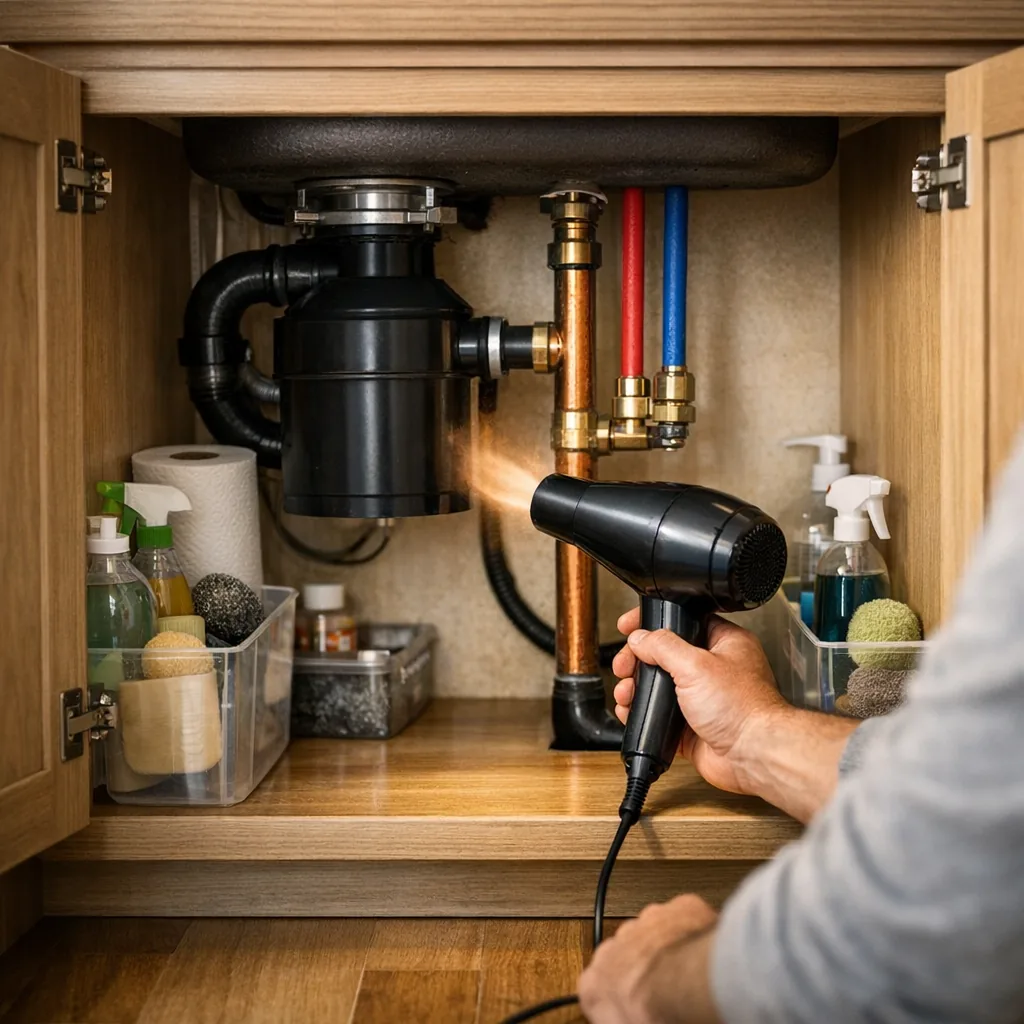
- Apply gentle heat to the frozen section: an electric heating pad wrapped around the pipe, an electric hair dryer, a portable space heater kept away from anything that can burn, or towels soaked in hot water.
- Keep going until full water pressure returns. Don't stop at the first drip.
- Call a licensed plumber if you can't find the frozen spot, if it's inside a wall, or if the pipe won't thaw.
- Check every other faucet in the house. If one line froze, others may have too.
Can I Use a Hair Dryer on Pipes?
Yes. A hair dryer is one of the methods the Red Cross lists. Aim it at the exposed pipe, work along the line, and keep the heat moving. Don't leave it jammed against plastic or insulation. Same idea with a heating pad or hot towels. Slow and steady beats blasting one spot.
What Should I Never Use to Thaw a Pipe?
Never use a blowtorch, open flame, propane or kerosene heater, charcoal stove, or any other open-flame device. The Red Cross is clear on this. You can turn a frozen-pipe problem into a fire, or put carbon monoxide into the house. If you use a space heater for thawing, keep it away from cabinets, towels and anything flammable, and stay in the room with it.
What If the Pipe Splits When It Thaws?
Here's the sneaky part a lot of folks learn the hard way: a frozen pipe often doesn't leak until it thaws. Ice can hide a split. When the ice melts, water finds the crack.
If that happens:
- Shut off the main water right away. Every adult in the house should know where it is. Our guide on finding your shutoff helps.
- Take photos and video of the wet areas before you move much. Document for your own records.
- Call for mitigation. Standing water and wet drywall don't wait until Monday.
CMDR Restoration, our mitigation partner (licensed by TDLR, RCO #1801), extracts the water, maps moisture and dries the structure. Then G3 Construction rebuilds what has to come out. One team, from wet to finished. Start on our water damage page, read what to do when a pipe bursts, or see attic water lines freeze prep if attic lines are your worry.
How Do I Keep This From Happening Again?
Thawing is Plan B. Plan A is still prevention: drip faucets on the coldest nights, open cabinet doors on exterior walls, cover hose bibs, insulate attic and garage lines, and keep the heat steady. Full checklist: how to prevent frozen pipes in North Texas.
We're based in Argyle, TX. If a pipe is frozen, or one already split and you're looking at water damage, call (945) 300-9018. Tell us what's happening, and we'll help you understand your next step.
Frequently Asked Questions
Why is there no water from my faucet in cold weather?
A frozen pipe is a common cause when only a trickle comes out, or nothing. Leave the faucet open and warm the likely section gently. If you can't find it or can't reach it, call a licensed plumber.
Can I use a hair dryer on frozen pipes?
Yes. The Red Cross lists a hair dryer, heating pad, space heater kept away from flammables, or hot towels. Never use an open flame.
How long does it take to thaw a frozen pipe?
It depends on the ice and how easy the pipe is to reach. Keep applying gentle heat until full pressure returns.
What if I hear water but nothing comes out of the faucet?
Ice may be blocking the line while pressure builds elsewhere. Leave the faucet open, thaw carefully, and watch for leaks. If anything looks wrong, shut the main and call for help.
Who do I call if a pipe bursts when it thaws?
Shut off the main, document the damage, then call for mitigation. CMDR Restoration (TDLR RCO #1801) extracts and dries; G3 Construction rebuilds. Call (945) 300-9018.
Keep learning: see our CMDR Restoration & Mitigation page, read El Niño Winter: Ice Storm Roof Leaks and What to Do in North Texas, or read what homeowners say in our customer reviews.
CMDR Restoration · Know Your Next Step
Tell Us What's Happening.
We'll help you understand how G3 can help. Call (945) 300-9018 or use the button below.
GET HELP WITH WATER DAMAGE