
 WatchWhy Does Home Restoration Seem to Drag On?
Shortly after 1 a.m., a water main broke in southeast Fresno, California. KMPH reports that some residents ended up with as much as three feet of water inside their homes, and families are facing an uncertain timeline for getting back in. ABC30 reports that hundreds of residents woke up to water damage, with crawl spaces filled and garages soaked.
One neighbor, Ryan Collet, told ABC30 what was running through his head: "So you're like, what do I do? Do we get up and go? Do we stay?"
That's the question. Every family with a water loss asks it, whether the water came from a city main, a burst pipe in the attic or a water heater in the garage. Let's answer it the way we would at your kitchen table.
Why Does This Matter in North Texas?
Fresno's problem was an aging city main. The city's utilities director told KMPH the pipe was made with a thinner material used during a growth period in the 1980s and 1990s. Ours is more likely to be a freeze. Around here, winter means burst pipes, attic lines that split when they thaw and slab leaks nobody saw coming.
Different cause, same morning. Water in the house, equipment on the way and a family trying to decide where everyone sleeps tonight.
So, Can We Stay Home During Mitigation?
Often, yes. It depends on three things.
- What kind of water it was. Clean water from a supply line is a very different job from water that's been sitting, or water that came from outside or from sewage. The CDC says floodwater may contain sewage, and to keep children and pets out of the affected area until cleanup is complete. Our guide to Category 3 water explains why contaminated water changes everything.
- How much of the house is affected. One bathroom and a hallway? Most families live around it. Kitchen, bedrooms and the HVAC all at once? That's a harder call.
- Who lives there. The CDC's mold cleanup guide says people with asthma or weakened immune systems should stay away from moldy sites, and children shouldn't take part in disaster cleanup work. If someone in your home is sensitive, plan around them.
The crew on site will tell you if a room isn't safe. Listen to them. If they say a space is off limits, it's off limits.
When Should You Plan to Leave?
Plan on somewhere else to stay, at least for a while, if:
- The water was contaminated, like sewage or outside floodwater
- Mold is already growing, or there's a strong musty smell
- Ceilings are sagging or floors feel soft
- The electricity isn't safe, or an electrician hasn't checked it after water got near outlets or panels
- The HVAC system took on water. The CDC's reentry guidance says to have a flooded HVAC system checked and cleaned before you run it, because it can spread mold through the house
If none of that applies, staying home is usually realistic. Just know what you're signing up for.
What Is It Like Living With Drying Equipment?
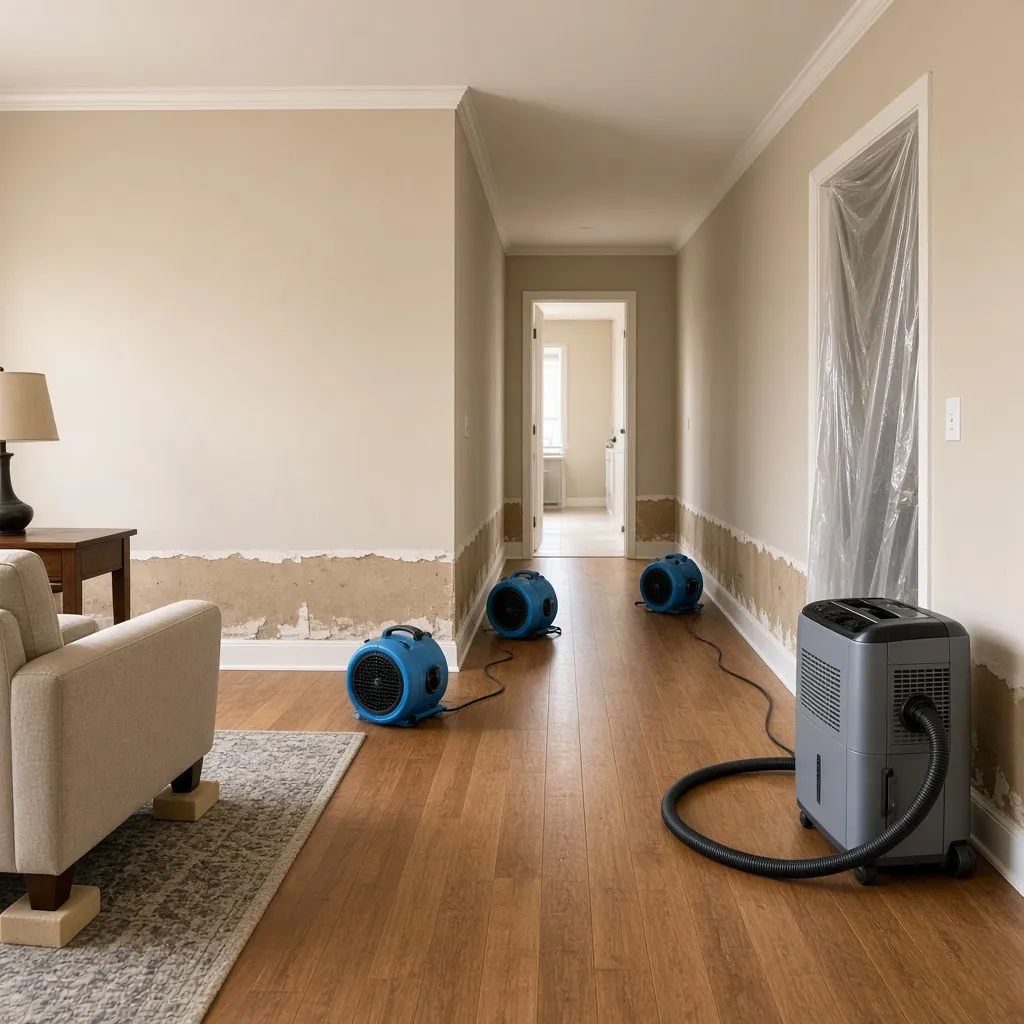
Loud. We won't pretend otherwise. Air movers blow across wet surfaces, and dehumidifiers pull that moisture out of the air. They run around the clock, and turning them off at night slows the drying. How long they stay depends on what got wet and what the moisture readings say, which is why the crew comes back to check. How structural drying works walks through it.
A few things that help families get through it:
- Pick a home base. Set up one dry room away from the equipment for sleeping, homework and a little peace.
- Keep kids and pets away from cords and open walls. Equipment and flood-cut drywall aren't playground material.
- Leave the equipment where the crew put it. It's placed on purpose, even if it's in the hallway.
- Keep doors and windows the way the crew asks. Drying works best when the air is controlled.
- Earplugs. Seriously.
Want the full tour of what the crew is doing? Read what a mitigation company does on site.
What Should You Do in the First Hour?
Before you decide where to sleep, protect the house:
- Shut off the water if it's coming from your plumbing. Know where your shutoff is before you need it: find your water shutoff.
- Stay safe around electricity. Don't walk through standing water near outlets or cords.
- Take lots of video. Document every wet room before things get moved.
- Call for mitigation. The CDC says to clean up and dry within 24 to 48 hours if possible to prevent mold growth. Our first 48 hours guide covers what happens next.
Why One Team Makes Staying Home Easier
Here's the thing families tell us after the fact: the stress isn't just the water. It's the phone calls. Who's drying it? Who's rebuilding it? When can we use the kitchen again?
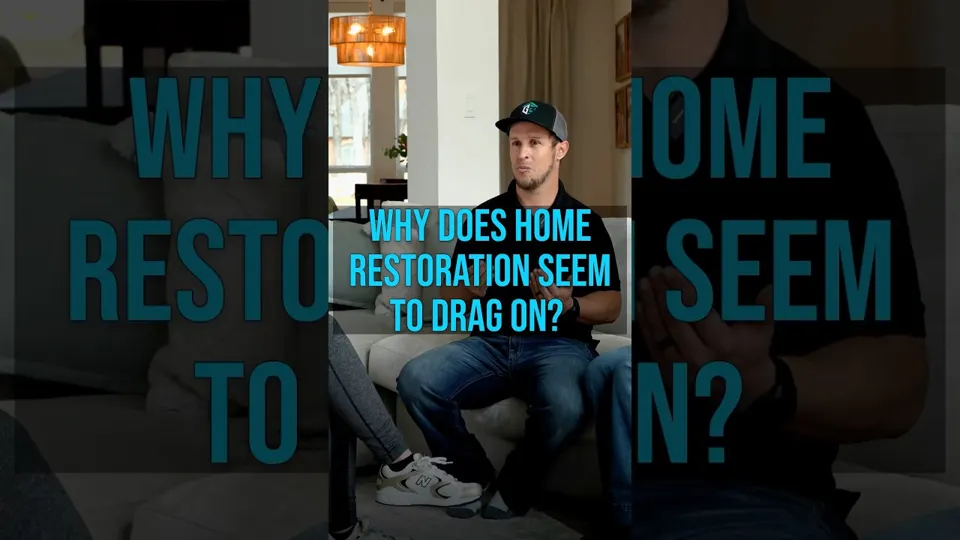
CMDR Restoration, the G3 Knows mitigation company (licensed by TDLR, RCO #1801), extracts the water, maps the moisture and dries the structure. Then G3 Construction rebuilds from the same file. One point of contact, so you're not re-explaining your loss to a new company every week. Watch the video on this page if you've ever wondered why restoration seems to drag on.
We're based in Argyle, TX. If water is in your house right now, call (945) 300-9018 or visit our water damage page. Tell us what's happening, and we'll help you understand your next step.
Frequently Asked Questions
Can I sleep in my house while drying equipment is running?
Often, yes, as long as the water was clean and the crew hasn't marked a room unsafe. Set up a dry bedroom away from the equipment, and expect noise.
Should I leave if the water was sewage?
Plan to. The CDC says to keep children and pets out of affected areas until cleanup is complete, and contaminated water calls for a more careful job.
Can I turn the fans and dehumidifiers off at night?
Please don't. They're set up to run continuously, and turning them off slows the drying.
Is it safe to run my heat or AC after water damage?
If the HVAC system took on water, the CDC says to have it checked and cleaned by a professional before you turn it on.
Who do I call for water mitigation near Argyle, TX?
Call (945) 300-9018. CMDR Restoration handles mitigation, and G3 Construction handles the rebuild.
Keep learning: see our CMDR Restoration & Mitigation page, read Water Mitigation vs. Restoration: What's the Difference?, or read what homeowners say in our customer reviews.
CMDR Restoration · Know Your Next Step
Tell Us What's Happening.
We'll help you understand how G3 can help. Call (945) 300-9018 or use the button below.
GET HELP WITH WATER DAMAGE