
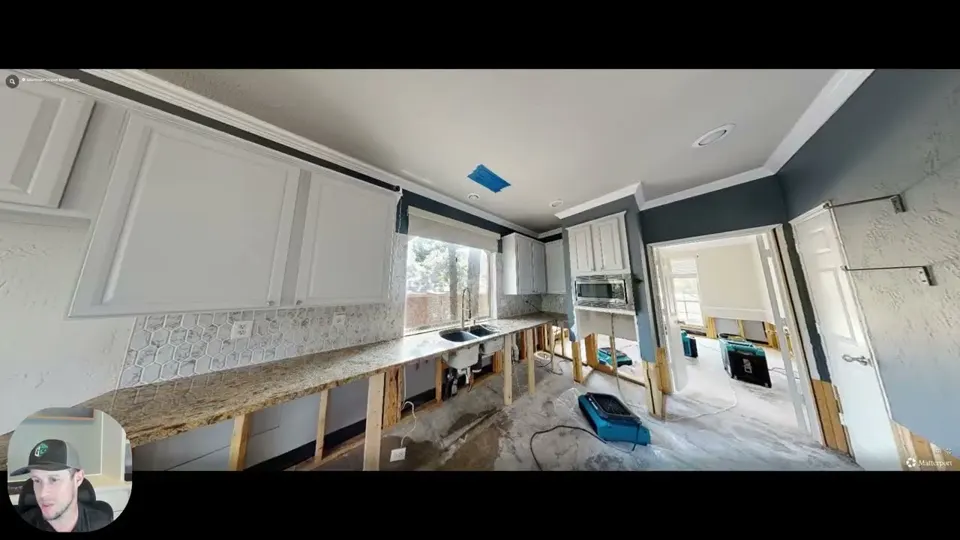
 WatchUnderstanding Water Loss Claims: A Homeowner's Case Study
If you've ever had a water loss, you know the sound. Air movers roaring, dehumidifiers humming, and a house that feels like a wind tunnel for a few days. Homeowners ask us all the time, "Can't I just open the windows and run a box fan?" It's a fair question. Here's why structural drying is a little more involved, and why it's worth doing right.
What Is Structural Drying?
Structural drying means drying the building itself, not just the surfaces. Drywall, insulation, wood framing, subfloor and concrete all soak up water. A floor can feel dry to your hand while the subfloor underneath is still wet. Structural drying gets moisture out of those materials and back to normal levels so they don't warp, rot or grow mold.
CMDR Restoration, our mitigation partner (licensed by TDLR, RCO #1801), handles this part of the job. Here's what that looks like.
What Happens Before the Equipment Goes In?
- Stop the source. Nothing dries while water is still coming in.
- Extract standing water. Pulling water out with extraction equipment removes far more than evaporation ever will.
- Map the moisture. Technicians use moisture meters and thermal cameras to see how far the water traveled. It's often farther than you'd guess: under cabinets, behind baseboards, into the next room.
- Remove what can't be dried. Wet padding, swollen particleboard and drywall that mold can grow on usually come out. Under IICRC standards, flood cuts typically go at least 18 inches above the wet line, and most crews cut at 2 feet so the rebuild is clean and efficient.
How Do the Air Movers and Dehumidifiers Work Together?
Think of it as a two-step team.
- Air movers push air across wet surfaces, which speeds up evaporation. They pull moisture out of materials and into the air.
- Dehumidifiers pull that moisture out of the air so it doesn't just settle back into the walls or ceiling.
Run fans without dehumidification and you can end up moving water from the floor into the drywall. That's why a box fan and an open window rarely do the job, especially on a humid North Texas day.
Sometimes crews add containment, like plastic sheeting that creates a smaller drying chamber, or they open up wall cavities so air can reach inside. On hardwood or tile, special drying mats or systems may be used.
Why Does It Take Several Days?
Because materials give up water slowly. Wood and concrete hold moisture deep inside. Drying too fast can cause cracking or warping, and drying too slow invites mold. The drying time depends on:
- How much water there was and how long it sat
- What materials got wet
- Whether the water was clean, gray or contaminated
- The temperature and humidity inside the house
- How much material was removed to open things up
We won't promise a number of days before we've seen it. Anyone who gives you an exact timeline over the phone is guessing.
How Do We Know When It's Dry?
Not by touch. By readings. Technicians take moisture readings at the same marked spots each visit and log them. They compare wet areas to a dry reference spot in an unaffected part of the house. When the wet materials match normal levels, the drying goal is met.
On larger losses that follow a written protocol from an indoor environmental professional, there's one more step: testing for moisture and contaminants. If everything passes, they issue clearance. That paperwork matters. It shows the structure was dried and cleaned properly before anything new goes back in.
What Should I Do While the Equipment Is Running?
- Leave the equipment on and where it was placed, even when it's loud
- Keep doors and windows closed unless the tech says otherwise
- Keep kids and pets away from cords and open wall cavities
- Don't put furniture back or start painting until you get the all-clear
- Write down questions for the next monitoring visit
What Comes After Drying?
Rebuild. Once the structure is dry and cleared, G3 puts back what was removed: drywall, insulation, trim, cabinets and flooring. The moisture logs and photos from mitigation go straight to our rebuild team. If you want to know how the two phases fit, read water mitigation vs. restoration.
If your house is wet right now, call (945) 300-9018 or visit our water damage page. Drying is one part of the full water mitigation process.
Frequently Asked Questions
Can I turn the equipment off at night?
Please don't. Drying works around the clock, and stopping it slows everything down.
Why is my electric bill higher?
Drying equipment uses power. Keep track of the days it ran in case you need it for your records.
Will my hardwood floors be saved?
Sometimes. It depends on how long the wood was wet and how much it cupped. Readings will guide the call.
Is it normal for the house to feel warm?
Yes. Warm, dry air helps pull moisture out of materials.
Keep learning: see our CMDR Restoration & Mitigation page, read How to Prevent Frozen Pipes in North Texas, or read what homeowners say in our customer reviews.
CMDR Restoration · Know Your Next Step
Tell Us What's Happening.
We'll help you understand how G3 can help. Call (945) 300-9018 or use the button below.
GET HELP WITH WATER DAMAGE