
 WatchStorm Damage? G3 Roofing & Construction Is Your Best Choice
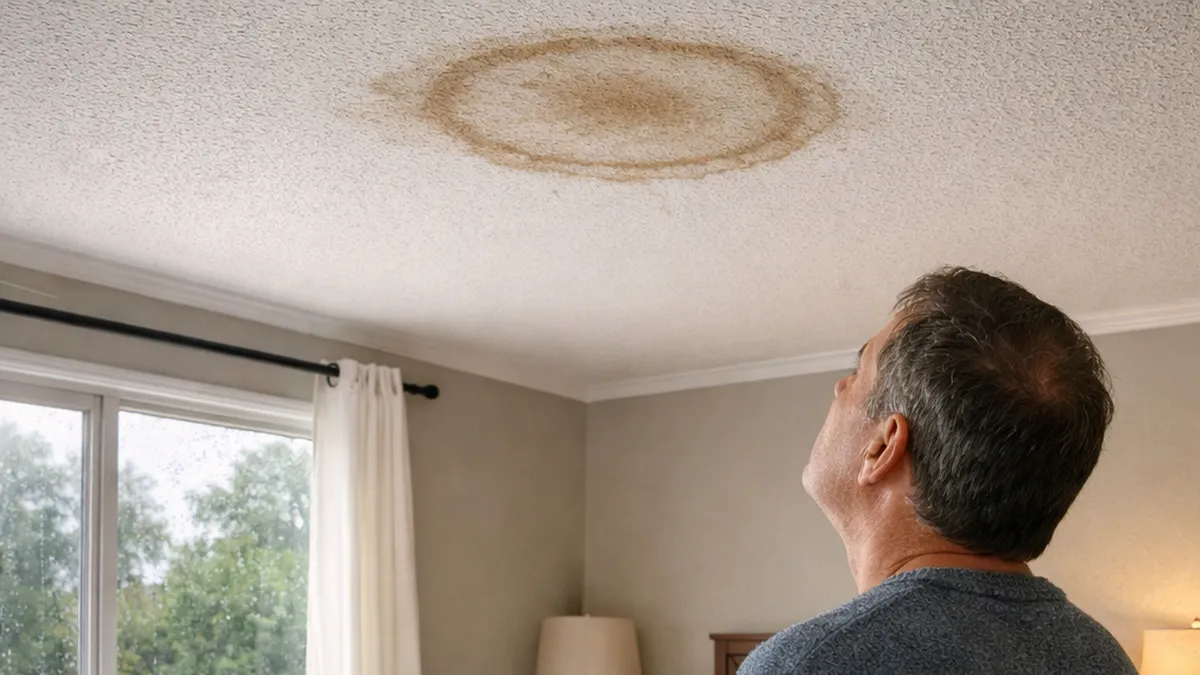
Y'all, that brown ring on the ceiling is not modern art. It's a clue. And after a storm rolls through North Texas, a lot of folks look up and find a new one.
So let's play detective and get in the know.
How North Texas Storms Cause Ceiling Stains
Storm lines often cross the Metroplex ahead of a cold front. In one recent example, FOX 4 reported rough thunderstorms in some areas, with lingering heavy rain and localized flooding concerns south and east of the Metroplex.
Closer to home, the Fort Worth Star-Telegram shared an NWS Fort Worth alert from that same storm line for strong thunderstorms in Denton, Collin, Cooke and Grayson counties, with wind gusts up to 50 mph. The NWS warned that gusty winds could knock down tree limbs and blow around unsecured objects.
Wind-driven rain, a lifted shingle or a limb on the roof is exactly how a ceiling stain gets started. The good news? North Texas usually gets a few dry days after a front clears. That's your window to find the source and fix it before the next storm.
What Does a Ceiling Water Stain Mean?
It means water got somewhere it shouldn't, and it already soaked through the drywall. By the time you can see it, the water has been in the attic or the ceiling for a while. The stain is the last chapter of the story, not the first.
The question is where it came from. Here's how to read the clues:
- It showed up right after the storm. Roof leak is the top suspect, especially on a top-floor ceiling. Think flashing, vents, a lifted or missing shingle, or a limb that hit the roof.
- It's near a chimney, skylight or vent. Flashing is a common culprit there.
- It's under a bathroom or upstairs laundry. Look at plumbing: a supply line, a drain or a shower pan.
- It's near the AC closet or an attic air handler. An AC condensate line or drain pan could be the source. Here's our guide on AC condensate and attic water.
- It keeps growing on dry days. Water that spreads with no rain in sight points to plumbing, not the roof.
Is a Ceiling Water Stain an Emergency?
Sometimes. Treat these as "call now" signs:
- The ceiling is sagging, bulging or soft. Water could be pooling above it. Keep people and pets out from under it.
- Water is dripping near a light fixture, fan or outlet. Shut off power to that area at the breaker if you can do it from a dry spot.
- The stain is growing while you watch, or the drywall is cracking.
If it's a dry, faded ring that hasn't changed in months, it still needs answers, but you have time to plan.
What Should I Do First?
- Take lots of video. Record the stain, the room and the outside of the house, including the roof from the ground. Do it before anything gets moved. Here's how to document a water loss for your records.
- Catch the water. Put a bucket or towels under any drip and move furniture and electronics out of the way.
- Trace a line on the stain. Circle the edge with a pencil. If it grows past the line, the leak is still active.
- If you think it's plumbing, shut off the water. Here's where to find your water shutoff.
- Stay off the roof. Wet shingles and gusty winds are a bad combination. If it's a roof leak, our guide on what to do when your roof leaks covers the next steps.
It is the homeowner's responsibility to do everything within their control to prevent additional damage. Small steps now keep a small stain from becoming a big rebuild.
Can I Just Paint Over It?
You can, and it'll look great for about one rainstorm. Paint hides the clue, not the problem. The wet insulation, drywall or decking above the stain stays wet, and wet materials that don't get dried can lead to mold.
Find the source and fix it, confirm the area is dry with moisture readings, and then patch and paint. In that order. If the drywall got soaked, read whether wet drywall can be dried or has to be replaced, and here's what to know about mold after a leak.
Why Call G3 and CMDR for a Ceiling Stain?
Because a ceiling stain is usually two jobs wearing one disguise: the leak and the water damage it left behind.
G3 Roofing and Construction inspects the roof and exterior and documents what we find. CMDR Restoration, the G3 Knows mitigation company, checks moisture in the ceiling, insulation and walls and dries what needs drying. Then G3 Construction repairs the ceiling and finishes. One team and one point of contact, so you don't have to tell your story twice. When you call G3, it really is that easy.
Want to see more about storm damage? Visit our roofing and storm damage page or our water damage page, and watch why G3 is a smart call after a storm.
Know Your Next Step
We're based in Argyle, TX, and we'd rather you understand that stain than stare at it. Tell us what's happening, and we'll help you understand your next step.
SEE A NEW STAIN ON YOUR CEILING? CALL G3 AT (945) 300-9018.
Frequently Asked Questions
What does a water stain on the ceiling mean?
It means water has soaked through the drywall from above. Common sources are a roof leak, a plumbing line, a shower or tub, or an AC condensate line or drain pan in the attic.
How can I tell if a ceiling stain is from the roof or plumbing?
A stain that appears right after rain on a top-floor ceiling points to the roof. A stain under a bathroom, or one that keeps growing on dry days, points to plumbing. A moisture check and an attic look usually confirm it.
Is a ceiling water stain an emergency?
It is if the ceiling is sagging, soft or dripping near electrical fixtures. Keep people out from under it, shut off power to that area if you can do it safely, and call for help.
Who should I call about a ceiling water stain after a storm?
Call G3 at (945) 300-9018. G3 inspects the roof and exterior, CMDR Restoration handles drying, and G3 Construction repairs the ceiling.
Keep learning: see our Water Damage page, read How to Document a Water Loss the Right Way, or read what homeowners say in our customer reviews.
Know Your Next Step
Tell Us What's Happening.
We'll help you understand how G3 can help. Call (945) 300-9018 or use the button below.
GET HELP WITH WATER DAMAGE