
 WatchStorm Damage? G3 Roofing & Construction Is Your Best Choice
Y'all, it's finally going to rain. KRLD's Dan Brounoff reports that the rainfall deficit at DFW Airport is approaching 6 inches for the year, and that showers move in late Saturday into Sunday, followed by some of the coldest air we've had this fall. The National Weather Service in Fort Worth has Sunday's rain chances at 90 percent for Denton County.
Your lawn is thrilled. Your roof? That depends.
After weeks of sun, the first real rain is when a roof tells on itself. Small problems that stayed quiet all summer and fall finally get a chance to show off, usually as a brown spot on the ceiling or a drip in the closet you never go in.
Why Does My Roof Only Leak When It Rains Hard?
Because a light rain and a hard rain are two different tests.
A drizzle runs down the roof the way it was designed to. A heavy rain, especially with wind behind it, pushes water sideways and backward, up under shingle edges, around flashing and into any gap that was "close enough" on install day. Gutters fill up faster than they drain and spill water where it was never meant to go.
So if your roof stayed dry in a sprinkle but drips in a downpour, that's a clue, not a mystery.
What Are the Usual Suspects?
Here's where we find most heavy-rain leaks. Think of it as a lineup:
- Pipe boots. The rubber collars around plumbing vents bake in Texas sun, crack and let water run right down the pipe. Cheap part, sneaky leak.
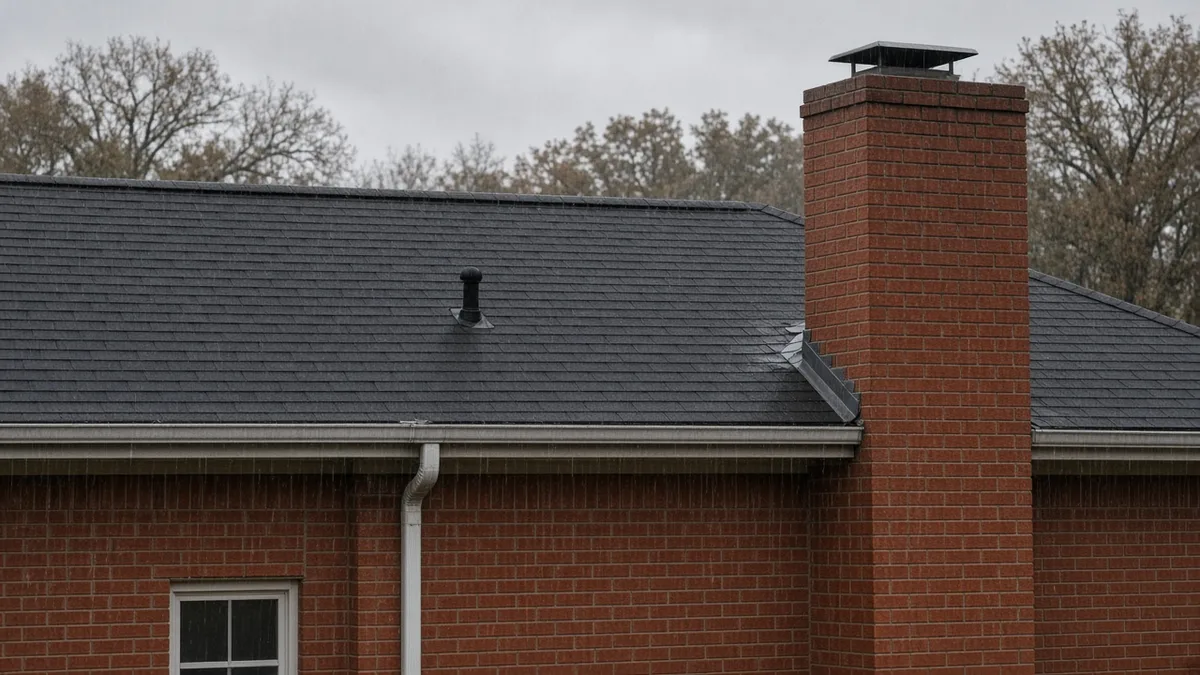
- Flashing at chimneys and walls. Where the roof meets brick or siding, metal flashing has to be layered right. When it's not, wind-driven rain finds the gap.
- Valleys. Two roof planes dump all their water into one channel. Debris and worn shingles here mean trouble in a hard rain.
- Clogged gutters. Fall leaves plus a dry spell equals a gutter full of junk. When it overflows, water backs up at the roof edge and soaks the fascia. Our guide on gutters after hail covers what to look for.
- Storm damage you haven't noticed yet. Lifted, creased or missing shingles from an earlier storm may not leak until the right rain comes along.
- Skylights and roof vents. Seals age out. Heavy rain finds them.
What Should I Check Before This Weekend?
You can do most of this from the ground or the attic. Please stay off the roof. We'd rather come out and look than have you meet the flower bed head first.
- Clean the gutters and downspouts if you can do it safely from a ladder on solid ground.
- Walk around the house with binoculars. Look for missing shingles, shingles that look lifted or curled, and anything shiny or bent around the chimney and vents.
- Peek in the attic on a sunny day. Look for water stains on the decking, dark spots on rafters or damp insulation, especially around vent pipes and the chimney.
- Check your ceilings now so you know what's new after Sunday. Take a quick photo of any spots you already have.
What If It Starts Leaking During the Rain?
Don't panic, and don't climb up there in the rain. Here's the drill:
- Put a bucket or towels under the drip and move anything valuable out of the way.
- If the ceiling is bulging with water, keep people out from under it.
- Take lots of video: the drip, the ceiling, the attic if you can get there safely, and the outside of the house once it's safe.
- Then call us. Our guide on what to do about a roof leak tonight walks through the first steps in more detail.
If water has been sitting in drywall or insulation, don't wait it out. Wet materials can lead to bigger problems. See what a ceiling water stain means for the next steps.
Is a Leak a Repair or a New Roof?
Most heavy-rain leaks we find are repairs: a pipe boot, a section of flashing, a few shingles. Sometimes, though, the leak is just the loudest symptom of a roof that's worn out or was installed wrong from the start.
That's why we look at the whole roof, not just the wet spot, and we show you what we find with photos and video. Watch the video on this page to get to know our team. The difference is in the details, and the details are where leaks are prevented.
Whatever we find, you'll get a straight answer and a written scope. Our work carries a 1-year workmanship warranty. And if you want to understand what you're looking at on paper, read how to read a roofing estimate.
Frequently Asked Questions
Why does my roof leak only in heavy rain?
Heavy, wind-driven rain pushes water sideways and up under shingles and flashing, and it overloads gutters. Weak spots that handle a drizzle can't keep up.
Where do most roof leaks start?
Pipe boots, flashing around chimneys and walls, valleys, clogged gutters, skylights and storm-damaged shingles are the most common spots.
Can a small roof leak wait?
It's not worth the gamble. A small leak can soak insulation and drywall before you see much on the ceiling.
Should I get on my roof to find the leak?
No. Check from the ground and the attic, take photos and video, and let a roofing crew handle the climbing.
We're based in Argyle, TX, and serve the surrounding North Texas communities. Let the rain do its job on the lawn, and let us make sure it stays out of your house. See our roofing and storm damage page, then call (945) 300-9018 or tap the button below. SCHEDULE A ROOF INSPECTION.
Keep learning: see our Roofing & Storm Damage page, read Fall Roof Maintenance Checklist for North Texas Homes, or read what homeowners say in our customer reviews.
Know Your Next Step
Tell Us What's Happening.
We'll help you understand how G3 can help. Call (945) 300-9018 or use the button below.
SCHEDULE AN INSPECTION