
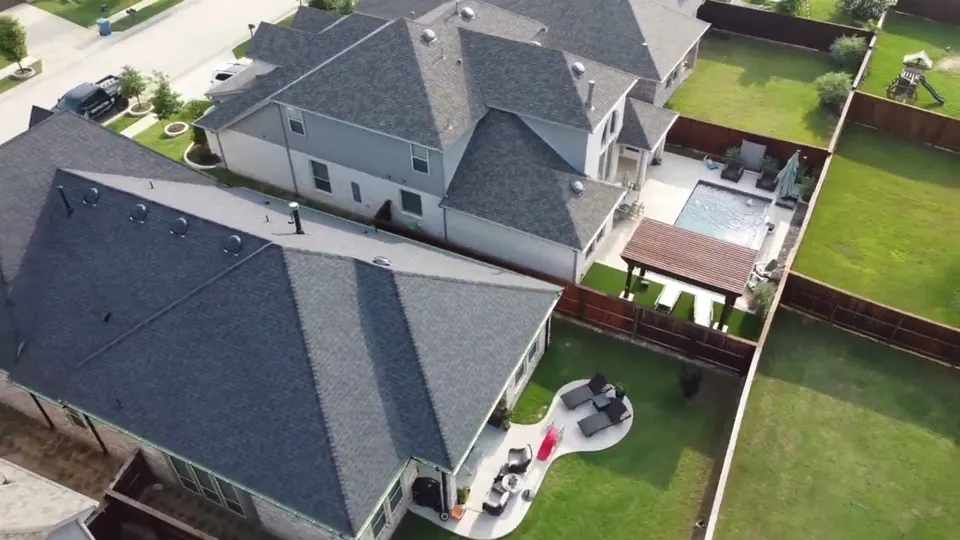
 WatchCertainTeed Landmark Black/Moire Transformation in Lantana, TX
When hail hits, everybody looks up at the shingles. Fair enough. But Matthew will tell you that one of the most common things he sees left undone after a storm is the gutters. The roof gets replaced, the crew drives off and the dented gutters, crushed downspouts and missing guards stay right where they were.
At G3, we don't skip the gutters. Here's why they matter and how we handle them.
What Do Gutters Actually Do?
Gutters catch the water coming off your roof and send it away from the house through the downspouts. Without them, water pours off the edge, splashes against siding, erodes landscaping and soaks the soil around your foundation. In North Texas, with expansive clay soil, inconsistent moisture around a slab is something you want to avoid.
Gutters also protect the fascia, soffits and windows below the roofline.
How Does Hail Damage Gutters?
Gutters are made of softer metal, so hail leaves its mark. After a storm, you may see:
- Dents and dings along the face
- Crushed or creased downspouts
- Bent hangers and sagging sections
- Loose or broken gutter guards
- Granules piling up from damaged shingles
Those dents also tell part of the story of the storm. Matthew calls this collateral, and it helps show the size and direction of the hail that hit your property. Read how to tell if your roof has hail damage.
Why Do So Many Roofers Skip Gutters?
Because they only care about the roof. Matthew talks about this in our videos. A roofer who cherry-picks the roof doesn't always know how to document or handle the rest. The homeowner is left holding the bag on dented gutters, torn screens and damaged AC parts.
We're licensed general contractors and licensed roofers, so we look at the whole scope and get it all done.
What Kind of Gutters Does G3 Install?
On a lot of the homes in our videos, we install 6-inch gutter systems. Many houses have 5-inch gutters, which are smaller. Larger gutters shed water off the roof quickly and efficiently, which matters during our heavy spring storms. They also outline the house nicely.
If you had gutter guards, we reinstall them, so leaves don't clog the system.
How Do Gutters Work With the Rest of the Roof?
A roof is a system. Drip edge guides water into the gutters. Valley metal and ice and water membrane protect the areas that carry the most water. Downspouts carry water away from the foundation. If any piece fails, water goes where it shouldn't. Read a quality roof starts before the first shingle.
What Should I Check on My Gutters Right Now?
- Walk the house and look for dents, sagging and loose sections.
- Check that downspouts are attached and pointing away from the foundation.
- Look for granules at the bottom of downspouts.
- Notice where water overflows during the next rain.
- Check that guards are secure.
- Take photos of anything dented after a storm.
What About My Insurance Claim?
We're your contractor. We inspect, document and rebuild, and we don't negotiate or adjust claims. We won't tell you what your policy covers. If there's gutter damage, we'll document it with the rest of the property so the record is complete. Questions about coverage belong with your carrier or agent.
Ready to Get Your Gutters Looked At?
We'll inspect your roof and gutters together and tell you what we find. Learn more on our roofing and storm damage page or call (945) 300-9018.
Frequently Asked Questions
Do dented gutters still work?
Sometimes, but dents can affect flow and show the hail story.
Are 6-inch gutters better?
They carry more water than 5-inch gutters, which helps in heavy storms.
Do you install gutter guards?
We reinstall them if you had them. Ask about options.
Can gutters affect my foundation?
Water dumped near the foundation can affect the soil around it, especially in clay soils.
Keep learning: see our Roofing & Storm Damage page, read Hail Damage Roof Repair in Argyle, TX, or read what homeowners say in our customer reviews.
Know Your Next Step
Tell Us What's Happening.
We'll help you understand how G3 can help. Call (945) 300-9018 or use the button below.
SCHEDULE AN INSPECTION