
 WatchUnderstanding Water Loss Claims: A Homeowner's Case Study
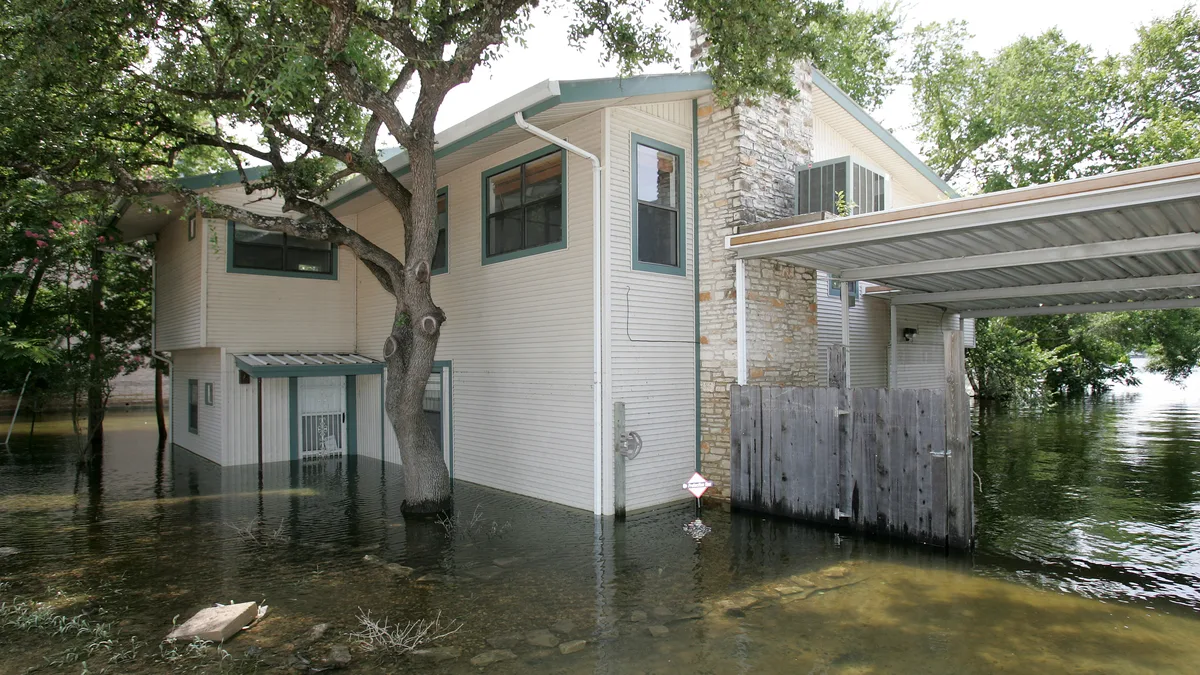
Our hearts are with the families in north Georgia and southeast Tennessee. A record flood swept through McCaysville, Georgia, and Copperhill, Tennessee, two small towns that share a river. Homes and businesses filled with water and mud, and now a lot of those families are finding out what their insurance does and doesn't cover.
That second part is why we're writing this. It's a hard lesson, and we'd rather y'all learn it from a blog post than from a flooded living room.
What Happened in Georgia and Tennessee?
CNN reports that at least one person died and more than 100 people had to be rescued after downpours pushed the river the two towns share to a new record high.
Insurance Journal reports that as much as 10 inches of rain fell overnight between Blue Ridge and Ellijay, Georgia, and the Toccoa River hit a record 18 feet. Agents there say some property owners carried flood insurance, but most did not, because the area hadn't seen flooding on that scale in decades. It was also McCaysville's second flood of the year.
One local agent said four of her policyholders reported heavy damage, and two of them had flood coverage. "But two only had homeowners' insurance, and they are freaking out," she told Insurance Journal.
Is Flood Damage the Same as Water Damage?
Not to an insurance policy. To a homeowner, water on the floor is water on the floor. On paper, where the water came from matters a lot.
The Texas Department of Insurance puts it plainly: "If it can rain, it can flood. And your home insurance policy doesn't cover flood damage." To cover flooding, TDI says you need a separate flood policy.
TDI's home insurance guide lists what most Texas home policies do and don't cover:
- Most policies cover the sudden and accidental release of water, like a supply line that breaks.
- Most policies don't cover flooding, or a continuous water leak.
- Coverages vary by company. TDI says to read your policy or talk to your agent to know your exact coverage.
We're contractors, not insurance agents, so we're not going to tell you what your policy covers. That's a conversation for your agent. What we can tell you is what we see on jobs: the question "Where did the water come from?" shapes everything that happens next.
Why Does This Matter in North Texas?
You might think floods are a coastal problem. TDI says otherwise. Texas has a wide band called Flash Flood Alley that runs through Central and North Texas, and TDI says almost every major city in Texas is in an area at high risk of flooding.
A few more points from TDI that hit close to home here:
- Flood zones don't tell the whole story. More than half of the homes flooded by Hurricane Harvey were outside designated flood zones.
- Growth changes the risk. When prairie and pasture get paved over with concrete and asphalt, areas that never flooded before can be at risk. That's a familiar sight across Denton County.
- There's a waiting period. TDI says most flood policies have a 30-day waiting period before they kick in. FEMA says the same about National Flood Insurance Program policies, with a few exceptions. You can't buy it when the storm is already on the radar.
Add our clay soil, which doesn't soak up heavy rain quickly, and you can see how a hard rain can send water where it doesn't belong.
What Should North Texas Homeowners Do Now?
- Read your policy before you need it. Find the water and flood sections, and call your agent with questions. Ask whether you have flood coverage and whether it covers your belongings too.
- Look up your flood risk. TDI points homeowners to FloodSmart.gov and FEMA's Flood Map Service Center.
- Handle the water you can control. Check that soil slopes away from the house, clean gutters and extend downspouts. Our guide to yard drainage solutions covers the basics.
- Know where your shutoffs are. A burst pipe is a different kind of loss than a flood, but both go better when you can stop the water fast. Here's what to do when a pipe bursts.
- Keep important papers up high. Store documents and keepsakes off garage and closet floors.
What If Water Gets In Anyway?
Stay safe first. Never walk or drive through moving water, and don't touch electrical anything while you're standing in water.
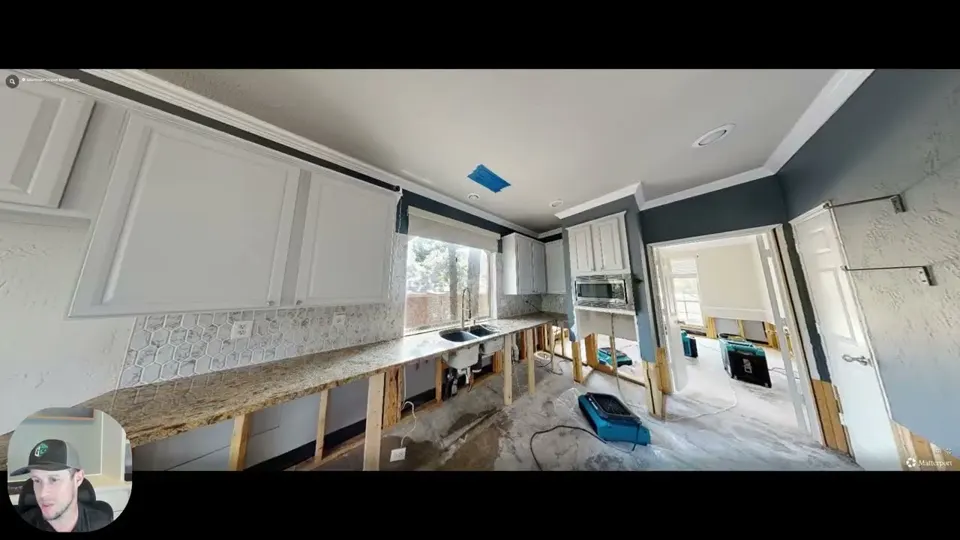
Once it's safe, take lots of video. Record every room, the waterline on the walls, the floors and your belongings before anything gets moved. Here's how to document a water loss for your records. It is the homeowner's responsibility to do everything within their control to prevent additional damage, so getting mitigation started quickly matters.
Floodwater isn't clean water. It's treated as Category 3 water, and anything porous it soaked usually comes out. Read what to do after floodwater gets in your house for the full first-steps list.
Watch: Understanding Water Loss Claims
The video on this page, Understanding Water Loss Claims: A Homeowner's Case Study, walks through a real water loss from the homeowner's side. It shows why good records from day one make the whole process easier to follow.
How CMDR and G3 Help
CMDR Restoration is the G3 Knows mitigation company. CMDR extracts water, cleans and dries the structure and documents moisture along the way. When the house is dry and stable, G3 Construction rebuilds it from the same file. You get one team and one point of contact, so you don't have to tell your story twice. Learn more on our water damage page.
Know Your Next Step
We're based in Argyle, TX. We can't control the rain, but we can help you understand what's happening in your home and what comes next. Tell us what's happening.
WATER IN YOUR HOME? CALL G3 AT (945) 300-9018.
Frequently Asked Questions
Does homeowners insurance cover flooding in Texas?
The Texas Department of Insurance says home insurance policies don't cover flood damage and that you need a separate flood policy. Check your own policy with your agent.
What's the difference between flood damage and water damage?
TDI's home insurance guide says most policies cover the sudden and accidental release of water, but most don't cover flooding or a continuous leak. Coverages vary by company.
Is there a waiting period for flood insurance?
Yes. TDI says most flood policies have a 30-day waiting period before coverage begins, so don't wait for a storm in the forecast.
Does North Texas really flood?
Yes. TDI says Flash Flood Alley runs through Central and North Texas, and more than half of the homes flooded by Hurricane Harvey were outside designated flood zones.
Who do I call if water gets into my house?
Call G3 at (945) 300-9018. CMDR Restoration handles water mitigation, and G3 Construction handles the rebuild.
Keep learning: see our Water Damage page, read Where Is My Main Water Shutoff? Go Find It Now, or read what homeowners say in our customer reviews.
Know Your Next Step
Tell Us What's Happening.
We'll help you understand how G3 can help. Call (945) 300-9018 or use the button below.
GET HELP WITH WATER DAMAGE