
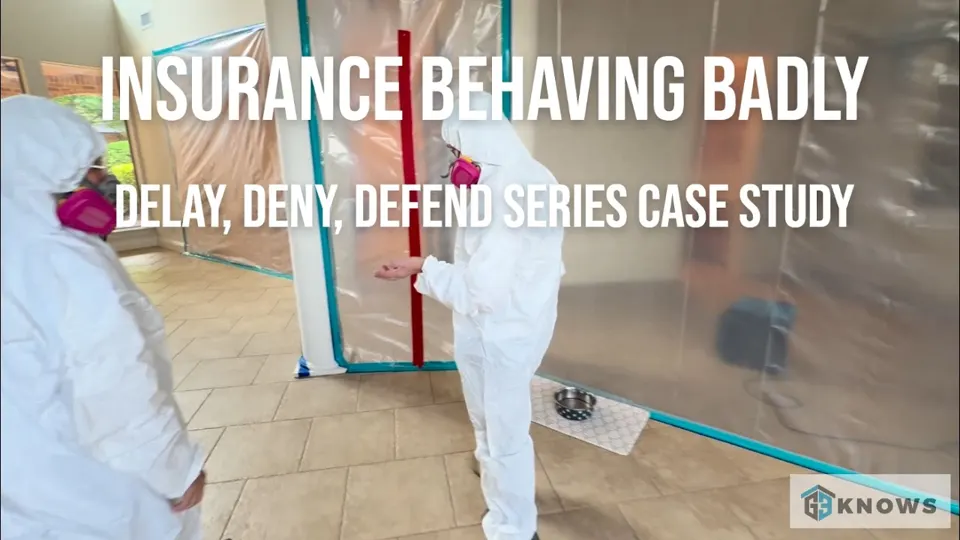
 WatchCat3 Water Loss Parody: Delay, Deny, Defend
After enough years walking into wet houses, you start to hear the same things over and over. Homeowners, neighbors, brothers-in-law and well-meaning internet strangers all have opinions about water damage. Some are harmless. Some can cost you a floor, a wall or a lot of peace of mind.
Here are five water damage myths we hear all the time, and the truth behind each one. No judgment. We've all believed at least one.
Myth 1: "A Few Box Fans Will Dry It Out"
We get it. Box fans are right there in the closet. But fans alone mostly move moisture around. They pull water out of surfaces into the air, and without dehumidification, that moist air settles back into the drywall, the ceiling and the furniture. Especially on a humid North Texas day.
The truth: Structural drying uses air movers and dehumidifiers together, placed according to a moisture map, with readings logged until materials reach normal levels. Read how structural drying works if you want the nerdy details.
Myth 2: "If It Feels Dry, It Is Dry"
Your hand is a wonderful tool. It's not a moisture meter. Drywall can feel dry on the surface and still be wet inside. Subfloor under carpet can stay wet for days. Insulation inside a wall can hold water you'll never feel.
The truth: Moisture meters and thermal cameras tell the real story. Professionals compare wet areas to a dry reference spot and only call it dry when the numbers match.
Myth 3: "Bleach Kills Mold, So We're Fine"
Bleach is great for a lot of things. But it doesn't fix the problem behind mold, which is moisture. And on porous materials like drywall and wood, it doesn't reach everything that's going on inside. Spraying bleach on a wet wall can just leave you with a wet, bleached wall.
The truth: Mold needs moisture, warmth and food. Matthew explains it plainly in our videos. Take away the moisture by drying properly, remove materials mold can grow on that won't dry and clean what stays. On larger losses, a licensed indoor environmental professional can write a protocol and test for clearance afterward.
Myth 4: "Let's Wait and See If It Gets Worse"
We understand the instinct. Nobody wants to make a big deal out of a little stain. But water damage tends to get worse quietly. Water keeps wicking up drywall and spreading under flooring. Materials that could have been dried end up needing to be replaced.
The truth: The sooner drying starts, the more you can usually save. A quick moisture check costs you a phone call and tells you whether you have a problem.
Myth 5: "Any Mitigation Crew Will Do It the Same Way"
This is the one that worries Matthew most. He's walked into homes where the first crew pulled out a couple square feet of drywall, left the carpet and made no flood cuts. The family started rebuilding, then worried mold was growing behind the walls. The house had to be opened up and mitigated again.
The truth: Mitigation has standards, set by the IICRC. Flood cuts typically go at least 18 inches above where moisture was found, and most crews cut at 2 feet. You get to choose who works on your house. Choose a team that follows the standards and documents everything.
Bonus Myth: "Water Damage Is Just a Plumbing Problem"
The plumber fixes the pipe. Somebody still has to dry the house, remove damaged materials and rebuild walls, floors and cabinets. That's why CMDR Restoration, our mitigation partner (licensed by TDLR, RCO #1801), and G3 work together, one team from wet to finished.
So What Actually Works?
- Stop the water.
- Take photos.
- Call for a moisture assessment.
- Let the drying happen with the right equipment.
- Rebuild only after readings say dry.
Learn more on our water damage page or call (945) 300-9018. Here's what actually works to prevent mold after water damage.
Frequently Asked Questions
Can I rent drying equipment myself?
You can, but without moisture mapping and readings, it's hard to know what's actually dry.
Is a little water stain really a big deal?
It might not be. A quick moisture check tells you for sure.
Does carpet always need to be replaced after a leak?
Not always with clean water caught early. Pad is often replaced. Category 3 water usually means removal.
How do I choose a mitigation company?
Ask about IICRC standards, moisture documentation and who does the rebuild.
Keep learning: see our Water Damage page, read Water Damage Restoration in Denton County | Argyle, TX, or read what homeowners say in our customer reviews.
Know Your Next Step
Tell Us What's Happening.
We'll help you understand how G3 can help. Call (945) 300-9018 or use the button below.
GET HELP WITH WATER DAMAGE