
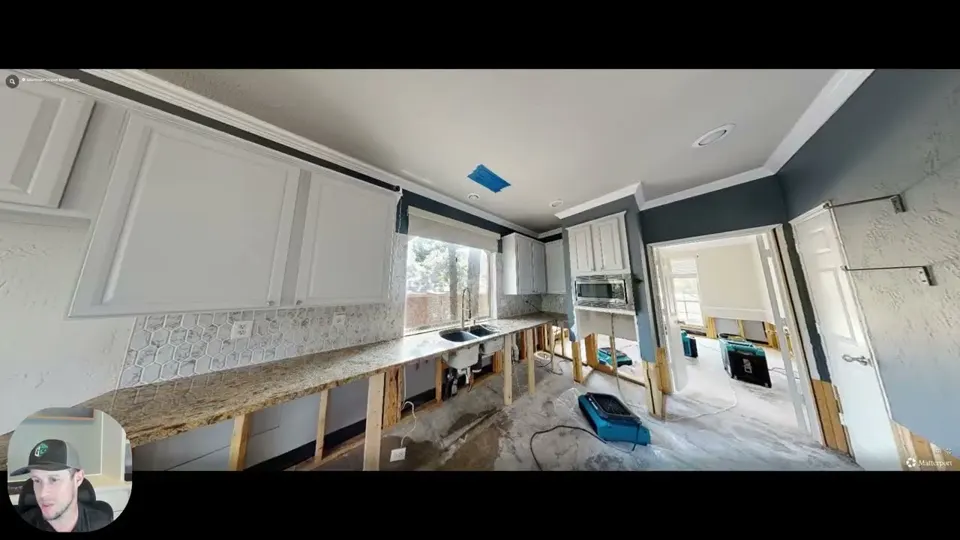
 WatchUnderstanding Water Loss Claims: A Homeowner's Case Study
Our CMDR guide on preventing mold after water damage is about stopping mold before it starts. This one is for the homeowner who's already worried. Maybe there was a leak a while back. Maybe a room smells musty. Maybe you see spots along a baseboard. Here's how to think about it calmly and what to do next.
What Are the Signs Mold Might Be Growing?
- A musty, earthy smell, especially in one room or closet
- Visible spots or fuzz in black, green, white or gray, often along baseboards, under sinks or on ceilings
- Stains that keep coming back after you clean or paint
- Peeling paint or bubbling wallpaper
- Warped baseboards or soft drywall
- A past leak that was dried with fans only, or not dried at all
Not every stain is mold, and not every musty smell means a big problem. But if you see a few of these together, it's worth looking deeper.
Why Does Mold Show Up After a Leak?
Matthew explains it in our videos: mold needs three things. Moisture, heat and food. Food is anything organic, like the paper on drywall, the paper backing on insulation and wood studs. North Texas homes are warm most of the year. So when water gets into a wall and isn't dried properly, mold has everything it needs.
We've seen homes where only a small piece of drywall was removed after a leak, the carpet stayed and no flood cuts were made. The family started rebuilding, then worried mold was growing behind the walls. In cases like that, the house has to be opened back up and properly mitigated.
Should I Test for Mold?
Testing can help when:
- You smell mold but can't see it
- There was a significant water loss and you want to know the extent
- You need to confirm a space is clean after remediation
- Someone in the home has health concerns
On larger jobs, we like working with a licensed indoor environmental professional. They inspect, test and write a protocol describing what needs to be removed and cleaned. They're an unbiased third party, not the carrier and not the contractor. At the end, they test again and issue clearance if everything passes.
What Should I Do Right Now?
- Find and fix the moisture source. Mold won't stop while water keeps coming.
- Don't disturb it. Scrubbing, scraping or sanding visible mold can spread spores.
- Don't paint over it. Paint hides mold. It doesn't remove it.
- Keep the area closed off and limit traffic through it.
- Take photos of what you see.
- Call for an assessment.
If you have health concerns, talk with your doctor. We're contractors, not medical professionals.
How Does Remediation Work?
Remediation is the process of removing mold and the materials it grew on, then cleaning what stays. It often includes:
- Containment to keep spores from spreading to the rest of the house
- Air filtration with HEPA equipment
- Removal of affected drywall, insulation and other porous materials
- HEPA vacuuming and cleaning of framing and surfaces
- Drying to bring moisture down to normal
- Clearance testing on larger jobs
In Texas, mold remediation is licensed by TDLR. CMDR Restoration, our mitigation partner, holds TDLR license RCO #1801.
Who Should I Hire?
Look for a company licensed for mold remediation in Texas that explains its plan, uses containment and documents the work. Ask whether an independent assessor will be involved on larger jobs. Be careful with anyone who shows up, finds mold everywhere and wants to start tearing out walls the same day without testing or a plan.
What Happens After Remediation?
Rebuild. Once the space is cleared, G3 replaces drywall, insulation, trim, flooring and anything else that came out. We work from the same photos and records, so nothing gets lost between teams.
When Should I Call?
If you see signs of mold or had a leak that wasn't dried properly, call (945) 300-9018 or visit our water damage page. We'll tell you straight what we see.
Frequently Asked Questions
Is all black mold dangerous?
Color alone doesn't tell you the type. Testing does. Treat any mold growth seriously.
Can I clean small spots myself?
Small surface spots on hard surfaces may be cleanable, but if it keeps coming back, there's a moisture problem.
Does mold mean I have to move out?
Not always. It depends on the extent and location. Containment often lets families stay.
Who licenses mold remediation in Texas?
TDLR. CMDR Restoration is licensed under RCO #1801.
Keep learning: see our Water Damage page, read Mosswood Before: Water Clues Hiding in Plain Sight, or read what homeowners say in our customer reviews.
Know Your Next Step
Tell Us What's Happening.
We'll help you understand how G3 can help. Call (945) 300-9018 or use the button below.
GET HELP WITH WATER DAMAGE