
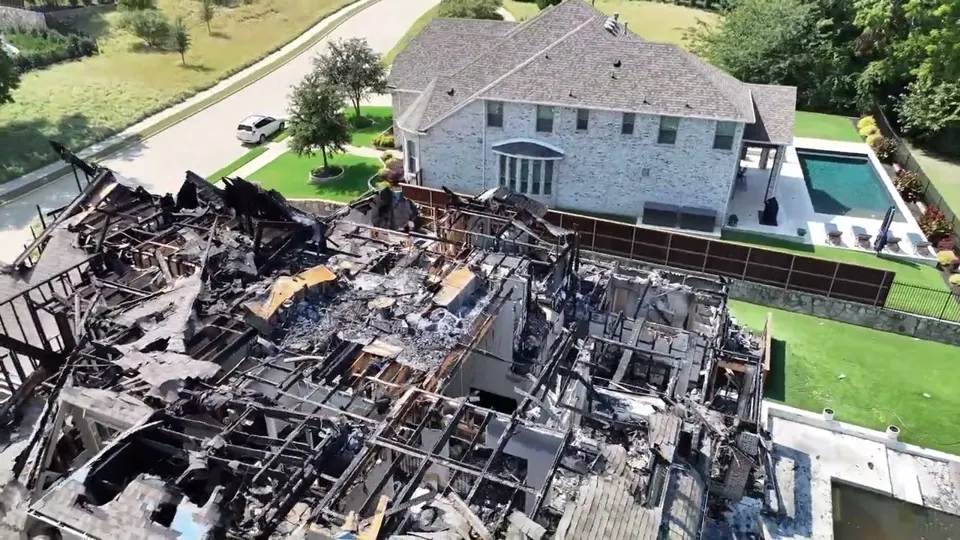
 WatchPost Fire Damage Flyover Project
When people think about a house fire, they picture burned rooms and smoke. What they don't picture is water, and a lot of it. But on almost every fire loss we see, water damage is a big part of the job.
Where Does the Water Come From?
Mostly from putting the fire out. Firefighters use a lot of water, and they should. Their job is to save the house and anyone in it. Water also comes from:
- Sprinkler systems in commercial buildings and some newer homes
- Pipes that burst from heat
- Rain coming in through roof openings and broken windows before the home is secured
Why Is Water After a Fire Such a Big Deal?
Because it doesn't stay where it lands. Water runs downhill and soaks into everything porous. It gets into:
- Drywall and the insulation behind it
- Subfloors and under carpet and pad
- Wood flooring, which can cup and swell
- Cabinets, especially the bottoms and toe kicks
- Ceilings on lower floors
- Contents sitting on the floor
Here in North Texas, heat and humidity speed things up. Wet building materials in a closed-up house can start growing mold. Then you have a fire loss, a water loss and a mold problem all at once.
What's Different About Water After a Fire?
Water from firefighting isn't clean. It picks up soot, ash and debris on its way through the house. That means it can carry contamination and stain materials it touches. Wet soot is also harder to clean than dry soot. It's why we tell people never to start cleaning on their own.
How Is Water Removed and the House Dried?
CMDR Restoration (TDLR RCO #1801), our mitigation partner, handles this step:
- Extraction. Standing water is pulled out with commercial equipment.
- Removal. Wet materials that can't be dried, like soaked insulation or ruined carpet pad, are removed.
- Drying. Air movers and dehumidifiers dry the structure.
- Monitoring. Moisture readings are taken and documented until materials are dry.
- Mold prevention. Areas at risk are treated as needed.
Drying is a process, not a guess. Moisture is measured and documented so we know when it's actually done. For more, read our CMDR guide on how structural drying works.
When Does G3 Get Involved?
G3 Construction inspects and documents the structure room by room and writes the repair scope in Xactimate, covering both the fire damage and the water damage. Once materials are dry and mitigation is complete, we rebuild. Drywall, insulation, flooring, cabinets, paint and trim are all part of that scope when they need to be.
The important thing is the order. We don't close up walls that are still wet. That's how you trap moisture and end up opening the same wall twice.
What Can Homeowners Do?
- Don't run the HVAC; it spreads soot and moisture.
- Take lots of video of wet areas, ceilings and floors before anything is removed.
- Move undamaged contents to dry areas only if it's safe and you've already documented them.
- Don't use household fans on soot-covered rooms; they blow soot around.
- Call quickly. Water damage gets worse by the hour.
See our water damage page and fire restoration page for more on how our team handles both.
Frequently Asked Questions
Is water from firefighting dirty?
Yes. It carries soot, ash and debris, which is why cleanup should be handled by professionals.
How long does it take to dry a house after a fire?
It depends on how much water was used and what materials got wet. Drying is measured with moisture readings, not guessed.
Can mold grow after a fire?
Yes, if wet materials aren't dried or removed. That's why fast water removal matters.
Who handles the water removal?
CMDR Restoration handles water removal and drying, then G3 Construction rebuilds.
If you've got water damage after a fire, call (945) 300-9018 or use the button below to get help with fire damage.
Keep learning: see our Fire & Smoke page, read What to Do After a House Fire: First Steps in North Texas, or read what homeowners say in our customer reviews.
Know Your Next Step
Tell Us What's Happening.
We'll help you understand how G3 can help. Call (945) 300-9018 or use the button below.
GET HELP WITH FIRE DAMAGE