
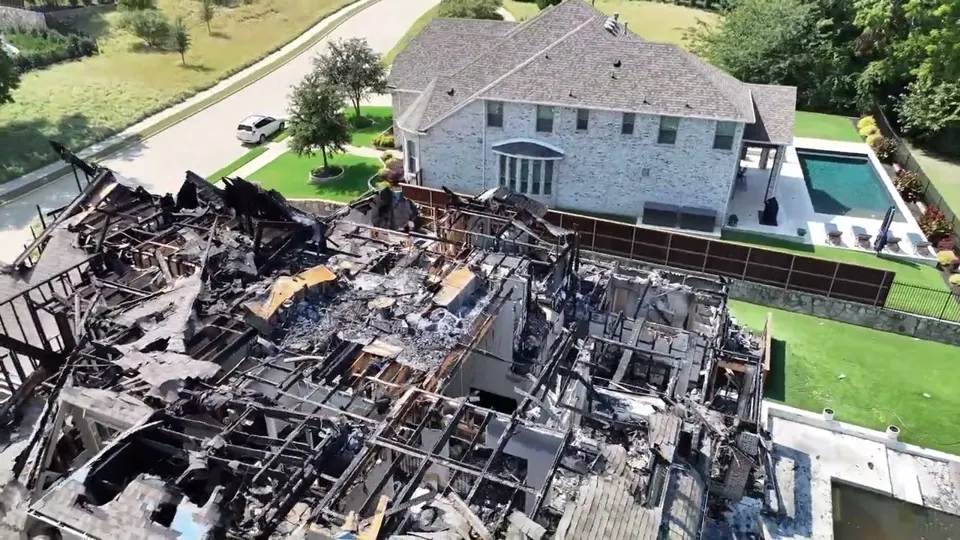
 WatchPost Fire Damage Flyover Project
If you live out around Argyle, Northlake, Justin, Bartonville or anywhere in North Texas with open land, you've seen it. A dry stretch, a windy afternoon, and suddenly there's smoke on the horizon. Grass fires move fast out here, and they don't need much to get started.
Here's how to protect your home and what to look for if a fire gets close.
Why Are Grass Fires a Risk in North Texas?
We get a combination of things that grass fires love: long dry spells, tall dormant grass, and strong wind, especially in late winter and early spring. A spark from a trailer chain dragging on the road, a mower blade hitting a rock, a burn pile or a tossed cigarette can be all it takes. Pay attention to burn bans and red flag warnings for your county.
What Is Defensible Space?
Defensible space is the area around your home that you keep clear so a fire has less to burn on its way to the house. You can't make a property fireproof, but you can make it a lot harder for a fire to reach the structure.
A practical approach:
- Closest to the house. Keep the first few feet around the foundation clear of mulch, dead leaves, firewood and anything else that burns. Rock or bare ground works well here.
- The near zone. Keep grass mowed short and watered when you can, trim tree limbs up off the ground, and space out shrubs.
- The outer zone. Mow fields and pastures near the house, and keep fence lines and ditches from becoming a fuse.
Our landscaping crew does a lot of overgrown cleanups for exactly this reason. See our lawn care and landscaping page.
What About the Roof and Gutters?
Embers are the real danger. They blow well ahead of the fire and land on roofs, in gutters and in vents.
- Clean gutters so dry leaves don't sit there waiting for a spark.
- Clear leaves and debris off the roof, especially in valleys.
- Check that attic and soffit vents have screens in good shape.
- Keep firewood, propane tanks and patio furniture cushions away from the house.
- Don't store hay, mulch or lumber against barns or garages.
Our roofing team can check your roof and gutters during an inspection; see our roofing page.
What Should I Do If a Grass Fire Is Close?
Follow evacuation orders from local officials. Don't wait. If you're told to go, go. Take pets, medications, documents and phones. Close windows and doors as you leave. Don't try to fight a moving grass fire yourself.
Can Smoke Damage My Home Even If It Doesn't Burn?
Yes. Smoke from a nearby fire can get into the home through open windows, vents, gaps around doors and the HVAC system. Afterward, you might notice:
- A smoky smell that won't go away
- Fine ash on window sills, floors and furniture
- Soot or discoloration around vents and returns
- Ash on the roof, in gutters and on outdoor surfaces
What Should I Check After the Fire Passes?
- Wait until officials say it's safe to return.
- Walk the outside of the house. Look for scorch marks, melted gutters or siding, damaged screens and burned fencing.
- Check the roof from the ground for damage or debris.
- Look in the attic, if it's safe, for embers, scorching or smoke smell.
- Change your HVAC filter before running the system for long periods.
- Don't scrub soot or ash off walls and fabrics. It smears.
- Take lots of video of everything you find.
If anything looks off, call us at (945) 300-9018. CMDR Restoration (TDLR RCO #1801) can handle smoke and soot cleanup, and G3 can inspect and repair the roof and structure. See our fire restoration page.
Frequently Asked Questions
When is grass fire season in North Texas?
Risk rises any time it's been dry and windy, and dormant winter grass is a big factor. Watch for burn bans and red flag warnings.
What's the most important thing I can do?
Keep the area closest to your house clear of anything that burns, and keep gutters and roofs clean.
Can smoke from a nearby fire damage my house?
Yes. Smoke and ash can get inside through vents, gaps and the HVAC system.
Should I clean ash myself?
Light outdoor ash can be rinsed carefully. Indoors, don't scrub soot; call a professional.
Need help after a nearby fire? Call (945) 300-9018 or use the button below to get help with fire damage.
Keep learning: see our Fire & Smoke page, read Kitchen Fire Damage Repair: What to Do Next, or read what homeowners say in our customer reviews.
Know Your Next Step
Tell Us What's Happening.
We'll help you understand how G3 can help. Call (945) 300-9018 or use the button below.
GET HELP WITH FIRE DAMAGE