
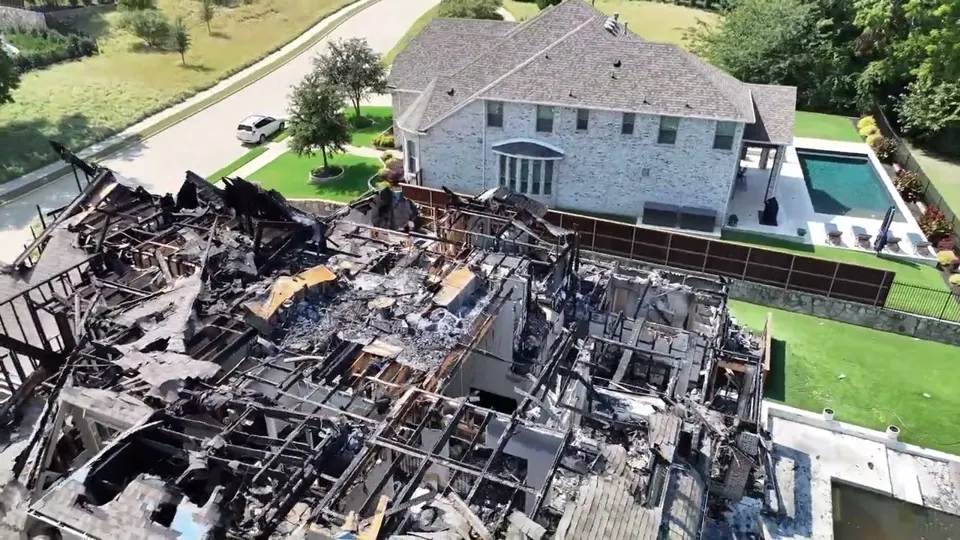
 WatchPost Fire Damage Flyover Project
After a fire, smoke is the damage that keeps on giving. It's in rooms the fire never touched, in closets that were shut, in the attic and down in the ductwork. And it's the part homeowners most want to tackle themselves, because it looks like it should just wipe off.
It doesn't. Here's why, and what actually works.
How Far Does Smoke Travel?
Further than you'd think. Smoke is hot, so it rises and spreads across ceilings. It's pushed by pressure into any gap it can find: closets, cabinets, attic openings, electrical outlets and light fixtures. If the HVAC was running, it went through the ducts and into every room.
That's why a fire in one room can leave a whole house smelling like smoke.
What Is Soot, Exactly?
Soot is the fine residue left when things burn. It's made of whatever burned, which in a modern house means wood, plastics, fabrics, foam and finishes. Some soot is dry and powdery. Some is oily and sticky, especially from kitchen fires and burning plastics. It's often acidic, which means it can etch and discolor surfaces the longer it sits.
What Doesn't Work?
- Scrubbing with a wet rag. Soot smears, drives into the surface and sets. You can turn a cleanable wall into one that needs to be sealed and repainted or replaced.
- Household cleaners. Most aren't designed for soot and can make staining worse.
- Running the HVAC. It spreads soot and odor through the whole house.
- Painting over it. Smoke odor and stains bleed through regular paint. Smoke-damaged surfaces need the right cleaning and sealing first.
- Candles, sprays and air fresheners. They cover odor for an hour. They don't remove it.
- Box fans. They blow soot around.
What Does Work?
Professional smoke damage cleanup is about removing the residue and the odor at the source. CMDR Restoration (TDLR RCO #1801), our mitigation partner, handles this as part of fire mitigation. In general, the process looks like:
- Assess. Figure out what kind of soot it is and how far it went.
- Remove what can't be saved. Burned materials and smoke-saturated insulation usually come out.
- Dry soot removal. Specialized sponges and HEPA vacuums lift dry soot without smearing it.
- Surface cleaning. The right cleaning products for the right surfaces.
- Odor treatment. Professional odor removal equipment and methods treat odor in the structure, not just the air.
- Ductwork. The HVAC system gets cleaned so it doesn't re-contaminate the house.
- Seal and rebuild. G3 Construction seals smoke-affected surfaces with the right primers before painting and rebuilds what was removed.
What About My Clothes and Belongings?
Some fabrics and belongings can be professionally cleaned. Some can't. Don't run smoky clothes through your home washer until you've asked, and don't plug in electronics that were in the smoke. Document everything with photos and video first. See our contents inventory guide.
How Do I Know If Smoke Is in My Walls?
If you still smell smoke after the visible soot is gone, especially on warm days, it's in the materials. Insulation, drywall, framing and carpet pad all absorb odor. That's a sign the cleanup wasn't complete.
When Should I Call a Professional?
Honestly? Any time there's been an actual fire in the house, not just burnt toast. Smoke damage is easy to make worse and hard to undo. A professional cleanup costs less in the long run than redoing work twice.
Frequently Asked Questions
Can I clean smoke damage myself?
Very light smoke from a minor incident may be manageable, but soot from a real fire should be handled by professionals. Scrubbing usually makes it worse.
Why does the smoke smell keep coming back?
Odor gets into insulation, drywall, framing and ductwork. If it isn't removed at the source, it returns, especially in North Texas heat.
Can I paint over smoke stains?
Not with regular paint. Smoke-damaged surfaces need cleaning and the right sealing primer first.
Who handles smoke cleanup?
CMDR Restoration handles soot and odor cleanup. G3 Construction rebuilds and finishes.
Learn more on our fire and smoke restoration page, then call (945) 300-9018 or use the button below to get help with fire damage.
Keep learning: see our Fire & Smoke page, read Smoke Odor Myths: Candles, Vinegar and Other Bad Ideas, or read what homeowners say in our customer reviews.
Know Your Next Step
Tell Us What's Happening.
We'll help you understand how G3 can help. Call (945) 300-9018 or use the button below.
GET HELP WITH FIRE DAMAGE