
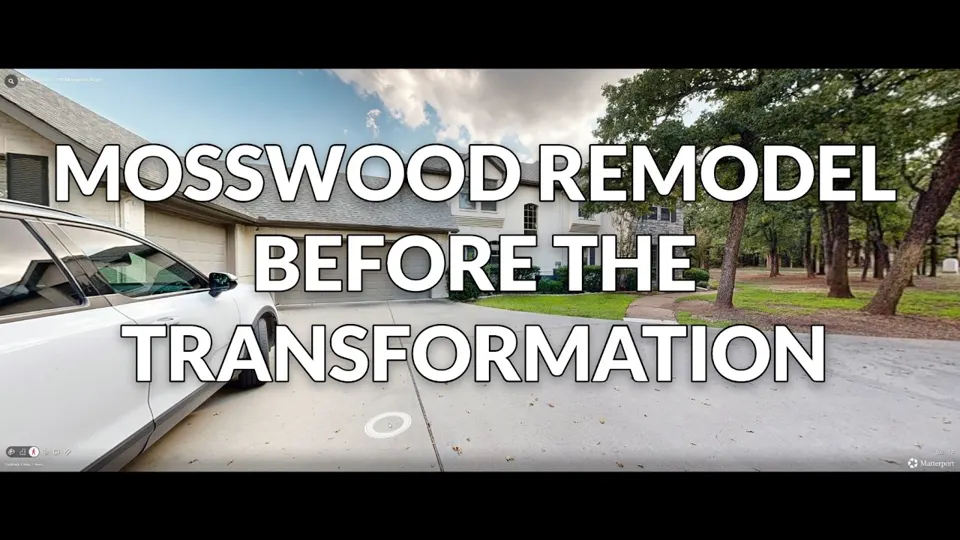
 WatchMosswood Renovation: Before the Transformation
After a water loss, the floors are often the first thing to go and the last thing to come back. Carpet gets pulled, hardwood cups and buckles, laminate swells. Once the house is dry, you get to pick something new, and for a lot of families, that's the first fun decision in a long process.
Here's how to think about flooring after water damage, starting with the part you won't see.
Why Does the Subfloor Matter First?
New floors are only as good as what's under them. Before anything new goes down:
- The structure has to be dry. Not "feels dry." Measured dry. CMDR Restoration (TDLR RCO #1801), our mitigation partner, documents moisture readings until materials are dry.
- Damaged subfloor has to be replaced. Plywood or OSB that swelled, delaminated or rotted won't hold a new floor flat.
- Mold has to be addressed if it's present.
- The slab has to be ready. Many North Texas homes are on slab foundations. Slabs hold moisture and need to be checked before flooring goes down.
- The cause has to be fixed. No point putting new floors over a leak that's still leaking.
Skip any of these and you can end up pulling up brand-new flooring. Our CMDR team explains drying in how structural drying works.
What Flooring Holds Up Best to Water?
No floor is waterproof if the water is coming from below or sitting for days. But some handle spills and leaks better than others.
Tile (porcelain and ceramic)
- Very water resistant
- Durable and long-lasting
- Great for kitchens, bathrooms, laundry rooms and entries
- Hard and cold underfoot; grout needs care
Luxury vinyl plank (LVP)
- Water resistant surface
- Softer and warmer than tile
- Many styles that look like wood
- Water can still get under it at seams and edges in a big leak
Engineered hardwood
- Real wood surface over a more stable core
- Handles humidity changes better than solid wood
- Still doesn't like standing water
Solid hardwood
- Beautiful and can be refinished
- Most sensitive to water; cups and buckles when wet
- Best kept out of wet areas
Carpet
- Soft and comfortable in bedrooms
- Not a good choice in kitchens, baths or laundry rooms
- Soaked carpet and pad usually have to be replaced after a leak
Can My Hardwood Be Saved?
Sometimes. Depending on how long it was wet and how bad the cupping is, some hardwood can be dried and refinished. Sometimes it has to be replaced. That's decided after mitigation, once the moisture is documented. Our water team walks through a real example in the Mosswood water loss.
Should I Use the Same Flooring Everywhere?
Many families use the rebuild to put one continuous floor through the main living areas instead of patching one room to match. It looks cleaner and avoids the patchwork look. Any upgrade beyond the repair scope is written up separately so you always know what's restoration and what's your choice.
What About Transitions and Floor Heights?
Different floors have different thicknesses. Where tile meets LVP or wood meets carpet, you'll need transitions. Plan them so you're not tripping over them. Floor heights also affect doors, baseboards, dishwashers and appliances.
What Questions Should I Ask?
- Is the subfloor or slab dry and documented?
- What underlayment or moisture barrier will be used?
- How will transitions be handled?
- Are baseboards and trim being replaced or reinstalled?
- What's the warranty on the product, and what's the workmanship warranty? (Ours is 1 year.)
What Did Mosswood Teach Us About Floors?
The Mosswood house had tile with wood inlay that was very early 2000s, and carpet in the master and under the stairs. Updating the floors throughout made the house feel bigger and more connected. Watch the before video above and the rest of the series on our remodel page.
Frequently Asked Questions
What's the most water-resistant flooring?
Porcelain and ceramic tile are among the most water resistant. LVP is also a popular water-resistant choice.
Can I install new floors right after a leak?
Not until the structure is measured dry and any damaged subfloor is replaced.
Can my hardwood be refinished after water damage?
Sometimes. It depends on how long it was wet and how much it cupped.
Who handles drying?
CMDR Restoration handles mitigation and drying. G3 Construction installs the new floors.
Ready to pick new floors? Call (945) 300-9018 or use the button below to start your remodel.
Keep learning: see our Remodeling page, read General Contractor vs. Handyman: Who Do You Need?, or read what homeowners say in our customer reviews.
Know Your Next Step
Tell Us What's Happening.
We'll help you understand how G3 can help. Call (945) 300-9018 or use the button below.
START YOUR REMODEL